






Albrechtsen: clandestine agreement to “collate” her writings with Sofronoff’s inquiry
First there is Walter Sofronoff. The son of a Russian refugee father, he speaks several languages, is the product of a Brisbane private Anglican education, has a comprehensive knowledge of classical music, particularly J. S. Bach, and is a garlanded Queensland lawyer – former solicitor-general and judge of appeal.
He is an aficionado of skateboarding, fast Italian cars, motorcycles, and light aeroplanes, one of which he crashed in 2014.
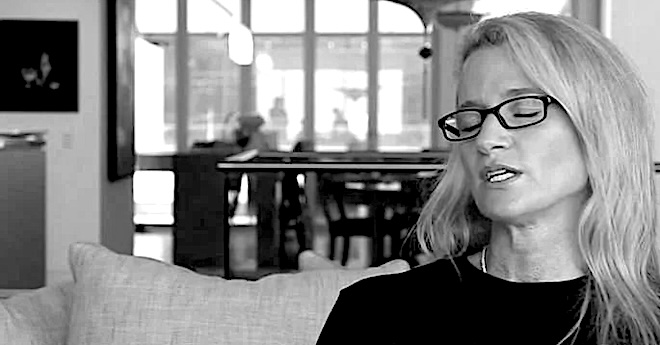
Then there is Janet Albrechtsen, an “opinion columnist” for The Australian and a former commercial solicitor at Freehills, the big law firm where she met her husband, John O’Sullivan, a friend and political associate of Malcolm Turnbull.
Other biographical sources disclose she was born in Adelaide to Danish immigrants and her university thesis was titled “The regulation of the fundraising process in Australia: searching for an optimal mix between legislative prescriptions and market forces”.
She was a Howard-era appointment to the board of the ABC and a former director and chair of the Institute of Public Affairs.
Finally, there is Shane Drumgold, former director of public prosecutions for the ACT. He was born in Sydney’s Mount Druitt and grew up in the local public housing estate. His father died by suicide in 1987 and his younger brother died at the age of three.
Drumgold started work as a telegram boy with Australia Post, eventually emerging as postal manager at Parliament House in Canberra before going to university to study law. He is also a light welterweight boxer and a former director of referees and judges for boxing in the ACT.
These are the three leading cast members in the drama provisionally called The Trial, The Inquiry, The Investigation into The Inquiry, The Prosecutor, The Journalist and The Cossack.
It could be another film by Peter Greenaway.
The most recent instalment was a judgement by Acting Justice Stephen Kaye in the ACT Supreme Court. His lineage on the paternal side is Ukrainian.
He presided over a judicial review of the findings by a Board of Inquiry into the Criminal Justice System in the ACT.
That is a misleading description, because the inquiry was really fixated on the trial of Bruce Lehrmann on a charge of rape and the conduct of the prosecutor Shane Drumgold.
Walter Sofronoff conducted the inquiry and compiled a report for the territory government highly critical of Drumgold.
The central, spellbinding component of Justice Kaye’s findings were that Sofronoff’s protracted interactions with Janet Albrechtsen, both before and during his inquiry, gave rise to a reasonable apprehension of bias.
The law doesn’t like to find that judges or senior legal figures presiding in courts, tribunals, commissions or boards are actually biased. The offence is sugar-coated so they are not biased, as such, only that a reasonable, fair-minded person might have “a reasonable apprehension of bias”.
Well, here we can say Sofronoff’s bias has been well and truly apprehended.
A random sample of hyperventilating articles from Albrechtsen, frequently co-authored with her sidekick Stephen Rice, includes: “Cops doubted Higgins but case was political”; “Verdict first, trial later: rule of law under threat”; “Spotlight falls onto #MeToo juggernaut”; “Recklessly indifferent to truth: Lehrmann sues Lisa for damages”; and “How close is too close? Media’s role in Brittany Higgins saga has escaped scrutiny for too long”.
There was also an unforgettable, lengthy, supportive interview with Senator Linda Reynolds.
A common refrain in all this was the presumption of innocence and due process had been undermined by the #MeToo movement.
In early August 2023, Albrechtsen was on a crusade – writing articles highly critical of Drumgold and foreshadowing grave consequences for him. At this stage no one was aware Sofronoff had given her an advance copy of his report, supposedly under embargo.
From the moment he was appointed, Sofronoff was in constant contact with Albrechtsen. Between February 9 and August 2, 2023, Justice Kaye detailed 51 phone calls between the two lasting well over six hours.
They had numerous exchanges during the hearing and while Drumgold gave evidence.
Sofronoff’s chitchats with other journalists were minimal, ranging over slightly more than two hours combined.
It seems The Australian’s man in Queensland, Hedley Thomas, a friend of Sofronoff’s, got the relationship rolling.
In February 2023, Thomas texted Sofronoff saying he had spoken to Albrechtsen, who indicated she was “happy to collate her writings for you and your inquiry”.
Thomas added: “Janet has done her homework and expressed great confidence in your appointment.”
Sofronoff and his counsel assisting also lunched with Albrechtsen in Brisbane. We don’t know who paid.
Sofronoff’s explanation for this cosy interaction was he was simply guiding reporters to help them and to improve their coverage of his board of inquiry – an excuse that can comfortably be dismissed as nonsense now we know he and the opinion writer were embedded with a mutual understanding about a collated approach.
Indeed, Albrechtsen was not shy about feeding suggestions to her comrade in arms. On April 3, 2023, shortly before the inquiry started, she suggested the courts could review the conduct of the prosecutor in a claim for malicious prosecution.
Sofronoff replied: “Thanks for alerting me to that point.”
Drumgold’s submission to Justice Kaye’s judicial review was that, quite apart from evidence before the board of inquiry, Sofronoff’s findings would have been influenced by Albrechtsen’s clandestine input.
Indeed, it was secret, conducted through Sofronoff’s private email address and not disclosed to Drumgold, who was most adversely affected by their complicity.
Further, Sofronoff was in breach of the board of inquiry’s own protocols and guidelines for media inquiries – all of which should be sent to the board’s executive director at a specified email address.
With the abundance of articles in The Australian flaying Drumgold, the open access Albrechtsen had to the person presiding over the board of inquiry, and the gift of an early copy of the report, Justice Kaye had no trouble finding that Shane Drumgold had established a case of “apprehended” bias against Sofronoff and his board.
Other grounds of review were advanced, less successfully – that Sofronoff was legally unreasonable in relation to eight findings by the board and that Drumgold had been denied natural justice in relation to three findings.
He succeeded in showing it was legally unreasonable for Sofronoff to find he had engaged in “grossly unethical” conduct in his cross-examination of Senator Reynolds – about her alleged political investment in the case.
It was also concluded Drumgold was not afforded natural justice in relation to a finding about his lack of knowledge about a freedom of information application relating to a letter he wrote to the ACT’s chief of police critical of members of the Sexual Assault and Child Abuse Team.
The overarching conclusion in relation to those parts of Sofronoff’s report directly relating to the terms of reference relevant to the DPP’s conduct was that the board of inquiry was infected with apprehended bias.
The outcome in Drumgold’s favour was sealed with an order for his costs.
The consequences of this takes us into even murkier territory.
The board of inquiry did not have any legal effect and its findings and recommendations were not enforceable at law. It merely provided guidance or commentary for the benefit of the chief minister of the ACT.
Because it was conducted under the Inquiries Act, the outcome from a judicial review of its findings was limited. It was not like an appeal from a judgement of a court where a finding of apprehended bias would result in the tainted determinations being a nullity and not worth the paper on which they were written.
Justice Kaye explained the limitations in his judgment:
“The report of the first defendant [Board of Inquiry/Sofronoff] did not, of itself, have any legal effect, or consequences. Accordingly, relief akin to the prerogative writ of certiorari is not available to the plaintiff [Drumgold]. However, in an appropriate case, the court has power to grant declaratory relief in respect of it.”
The proceedings before Kaye were conducted under the inherent powers of the Supreme Court, where he could make declarations of law that Sofronoff’s report breached fundamental legal principles – with no power to go beyond that.
None of which has stopped Janet Albrechtsen indulging in a generous bout of self-justification. Before Kaye’s judgement was delivered, she wrote that her sole purpose was to shine light and truth on the criminal justice chronicle of Lehrmann and Higgins.
Under the self-basting headline “We stand for the principles that guarantee a fair trial” she delivered a lecture about the importance of the rule of law and fairness.
Yet she appears to have no appreciation that she and Sofronoff were in a sub-rosa arrangement that amounted to unfairness and which, if discovered, would result in a report that was for all intents and purposes worthless.
So much for the rule of law.
We can hardly blame a journalist for wanting to get pally with a source in order to get the inside running, but here we have a journalist with an embedded agenda in cahoots with a functionary of government commissioned to make independent critical findings.
Only this week, in an imaginative reinterpretation of the outcome, Albrechtsen told her readers that Shane Drumgold’s reputation “remains in tatters” and that “the Sofronoff report remains standing”.
That’s not exactly true. As retired Melbourne barrister Geoffrey Gibson wrote in a recent edition of his newsletter:
“Let me put it this way. Your professional conduct is the subject of a public inquiry conducted by an eminent lawyer with all the credentials for that purpose. You are being pursued in the press by someone who makes a living from that kind of campaign and public vilification. The person hearing the matter then finds against you in very grave and personal terms. Then you find he has been secretly corresponding with your enemy all the time. Which of them do you want to throttle first?”