








Psyching the judges
It’s heartening that the Federal Court has engaged well-being experts so that new judges get a grip on things as they start work.
Dr Carly Schrever and Sally Ryan at Human Ethos have carved out a successful niche looking after the psyches of judges and lawyers.
Among other clients, they have a contract to look after the Federal Court’s “wellbeing induction services” – presumably that means re-tuning the minds of lawyers who suddenly find themselves on the bench.
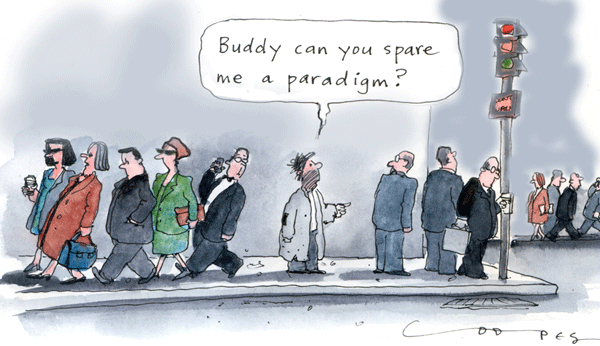
Or as Human Ethos’ website explains: empowering professionals seeking a “different cultural paradigm”.
According to AusTender documents the original contract for Schrever and Ryan was for an amount of $28,050 covering the period April 11, 1024 to June 30, 2027.
On February 11, 2025, the contract was increased by $43,725 (the amendment value) to a total of $71,775.
These are known as “limited tenders”. Once a threshold amount of $80,000 is anticipated a government contract must, except in limited circumstances, be subject to an open tender.
What makes this arrangement for wellbeing induction services worthy of mention is that Dr Schrever is the wife of Federal Court judge Elizabeth Bennett, as Chief Justice Mortimer mentioned in Justice Bennett’s welcome ceremony, on February 19, 2025 – eight days after the amended contract was executed.
In fact, the amendment was published on the day of Elizabeth Bennett’s public welcome ceremony.
She actually took an affirmation as a Federal Court judge on December 20, 2024 and with a welcome ceremony on February 19, 2025 – so the initial contract was in place before she became a judge, while the revised, increased contract took effect after she was a judge.
The judge is in the singularly fortunate position of being able to have wellness advice at the court and at home.

This does not mean Justice Bennett had anything to do with the contracts, nor does it mean that Human Ethos should not have been contracted by the court. By all accounts it provides a top-notch service.
It would have been polite that a tender, of only $8,255 under the threshold, in a case where one of the tenderers is the partner of a sitting judge, might have gone to open market – purely for the sake of perceptions.
This is an issue that goes to the court’s administrative processes. We asked the PR brigade for a response – this is what came back:
“Human Ethos were engaged in April 2023 to provide tailored wellbeing inductions and education sessions for Federal Court judges across the country.
They have demonstrated both national and international experience working with judges’ wellness and extensive knowledge of the psychological impact of judicial work.
This particular field of expertise is relatively specialised.
The administrative processes surrounding this procurement were considered appropriate.”
Fees please
It was alarming and mystifying that functionaries at the Federal Court issued an invoice to an Aboriginal body corporate in a native title case demanding a crushing $507,365 for “setting down and hearing fees”.
The applicant is Yindjibarndi Ngurra Aboriginal Corporation RNTBC which brought proceedings against the State of Western Australia and various other respondents, including FMG Pilbara, Pilbara Energy, Pilbara Infrastructure, and Pilbara Gas Pipeline.
It is a significant public interest case because it is the first application for compensation to be paid under the future acts regime of the Native Title Act.

The cases raises a number of novel questions concerning the construction of the legislation.
At an early stage of hearings, that have been conducted over several years, the court permitted the proceedings to be live streamed.
Simon Blackshield, an experience native title lawyer who acts for the YNAC, gave evidence that in more than 30 years of practice in native title cases he is not aware of the court imposing fees of this nature on any of his clients.
The first invoice for setting down and hearing fees arrived on May 14, 2024 for $439,585. That was at least 17 months after the matter was set down for hearing.
Later an “adjusted” invoice arrived from the court for in excess of half-a-million dollars.
Blackshield made applications for fee exemptions, which were rejected by functionaries of the court – even though there were amble grounds for the fees to be waived.
Fortunately, Justice Stephen Burley rode to the rescue, pointing out that substantial numbers of the Yindjibarndi people have personal incomes between $0 and $20,000 a year and that 50% of the population live in assisted housing.
Further:
“YNAC does not have direct access to funds for the payment the hearing fees and no ability to fund the proceedings meaning that it depends of third party Aboriginal bodies to assist in the funding.”
He ordered that the fees be scrubbed.
Yindjibarndi Ngurra Aboriginal Corporation RNTBC v State of Western Australia
Sandy of the Overflow
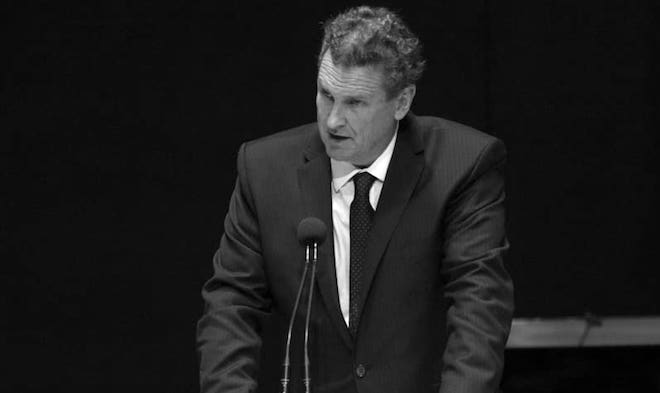
It’s good to see Judge Sandy Street at the Circuit Court in top form with some urgent prescriptions for government action.
Sitting in Perth, where he sometimes works to deal with the overflow, he heard a penalty application brought by the Fair Work Ombudsman.
The respondents were AICA International Pty Ltd and its sole director and shareholder Shiju Mathews. According to the Ombudsman the company “operates in several industries including legal, accounting, education, marketing and information technology”.
A compliance notice for an employee’s unpaid entitlements of $2,654 had been studiously ignored.
The company had stopped trading, although was still registered on ASIC’s roll, while Mathews had gone belly-up in bankruptcy.

Not only had the respondents failed to pay the money, and the employee’s superannuation, but neither of them had engaged with the Ombudsman or the court.
Judge Sandy was ropable. He imposed a penalty on the company of $33,000, even though it is not trading, and $6,600 on the bankrupt Mathews.
However, that is not sufficient deterrence. HH wants a decent flogging for people who contravene notices from Fair Work inspectors. Penalties should be “substantially increased”, with the power to disqualify people as company directors who mess with the courts, the Fair Work Act, and their employees’ entitlements.
“The need for such reform is urgent.”
Will Sandy’s suggestions reach the attention of legislators? What will they make of them? Will they do anything about this state of affairs?
Fair Work Ombudsman v AICA International Pty Ltd