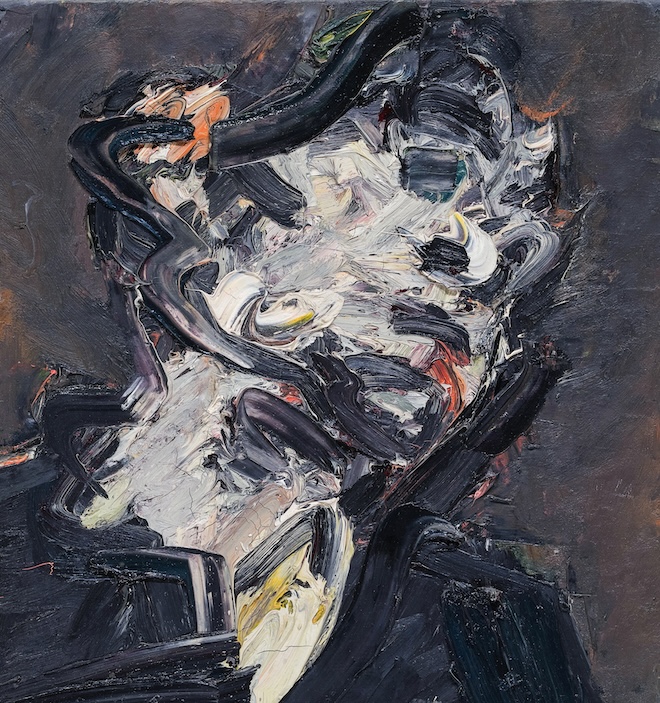
Frank Auerbach’s Head of J.Y.M.
On Tuesday (April 2) Justice Michael Lee, during the application from Network Ten to reopen its defence in the Lehrmann case, mused in relation to damages about very small units of currency.
A halfpenny was mentioned, and he observed that five cents is the smallest coin of the realm.
Even five cents would be too large an award for Bruce Lehrmann who looks like being the most disastrous defamation plaintiff since Oscar Wilde – and probably Christian Porter.
He entered the ring seeking reputation repair and he exits with the credit of a scumbag: industrial scale deceit; expensive Oriental “massages”; mind-altering substances; free accommodation; bonus treats; a $361, 1.9kg tomahawk steak at the Chophouse Restaurant; and even more disturbing – a round of golf.
The Stokes camp is struggling to explain why it hasn’t been upfront with the amount and value of the beads and mirrors used to lure Lehrmann into the studio so that Liam Bartlett could sink his gums into those fleshy thighs.
Is it possible that man of the moment Taylor Auerbach is related to the German-British artist Frank Auerbach – from the Lucien Freud and Francis Bacon school of London painters? Justice Lee raised that intriguing point on Tuesday.
It was also mentioned in court that Taylor had undergone some mental health and emotional issues, which may be evident during cross examination today and tomorrow (April 4-5) – along with some of his journalistic priors.
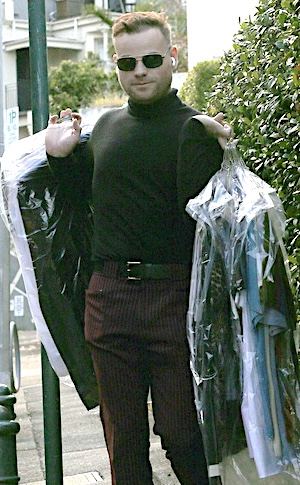
Auerbach – with laundryThe nub of Auerbach’s allegation is that Lehrmann gave material to the Channel Seven Spotlight show, in breach of the implied Harman undertaking. He has turned the Lehrmann trial from a he said, she said into a he said, he said.
This included over 2,300 pages, including intimate text messages between Brittany Higgins and her previous boyfriend Ben Dillaway, Higgins communications with celebrity journalist and author Peter FitzSimons, and other material – including her diary entries.
Matt Collins, for Ten, told the court that this came from an e-brief prepared by the AFP, served on Lehrmann ahead of his criminal trial – of which only 17 pages had been tended at the trial.
Collins characterised this as not only an issue of Lehrmann’s credit, but an abuse of process and “an outrageous contempt of court” designed to intimidate and weaken Higgins as a witness in the defamation case.
It’s a puzzle why the lawyers at Seven didn’t know or question from where this spicy stuff came.
Matthew Richardson SC, for Lehrmann, described the fresh evidence as “lipstick on a pig”.
≈ ≈ ≈
All of which gives us a close-up view of the horror show that is the contemporary media.
Taylor Auerbach arrives as an A-Grade disrupter to the Seven Network and its flaky patina.
Then there’s the Murdoch camp, and it’s tireless dishonesty. Systematically thrashing Brittany Higgins and thereby favouring the cause of Bruce Lehrmann turns out to be a woefully embarrassing misjudgement by the hacks at The Australian.
The Murdoch broadsheet itself has been the recipient of Higgins’ personal and private text messages with her partner David Sharaz, and extracts of the five hour pre-interview Network Ten Project session.
The material from Ten had been obtained by the Federal Police prior to the criminal trial.
Samantha Maiden from news.com.au initially set the hares running with her story in February 2021 where Higgins claimed to have been raped in Parliament House.
Her memory up to that point was unclear. She had been drunk, her dress was not where it should be and she was concerned about consent.
Yet, Maiden told Higgins in a telephone conversation that Lehrmann claimed, “nothing had happened”. Higgins knew from that moment she had not consented. It had never entered her head that “nothing had happened”.
Janet Albrechtsen, crusader against #MeToo and “victim-centric” language, later wrote that there were “questions” whether Maiden was too close Higgins.
In a piece with the headline, Media’s role in Higgins saga has escaped scrutiny for too long, Albrechtsen proclaimed that “some female journalists” are too invested in the issue to report it fairly. No irony intended, apparently.
“This is not a sign of healthy journalism”, declared the opinion writer whose clandestine collaboration with Walter Sofronoff resulted in biased findings against the former ACT DPP Shane Drumgold.
Maiden delivered a sharp response:
“In fact, I caught up with Higgins recently, and I was struck by the fact that the kind and thoughtful woman I spent time with bears no relationship to the person who emerges in some of the reporting by those who have never bothered to pick up a phone and speak to her.”
Following a complaint by Higgins’ lawyer Leon Zwier, the National Anti-Corruption Commission has confirmed that it is investigating the circumstances of these leaks and whether they are in contempt of court.
The Financial Review’s reliable conservative wingman, Aaron Patrick, also delivered an out of the blue whack-job on Maiden.
Justice Lee himself has emerged as a celebrity TV figure, with tens of thousands of viewers tuning into the Federal Court’s YouTube channel spellbound by his savoir faire and erudition.
≈ ≈ ≈
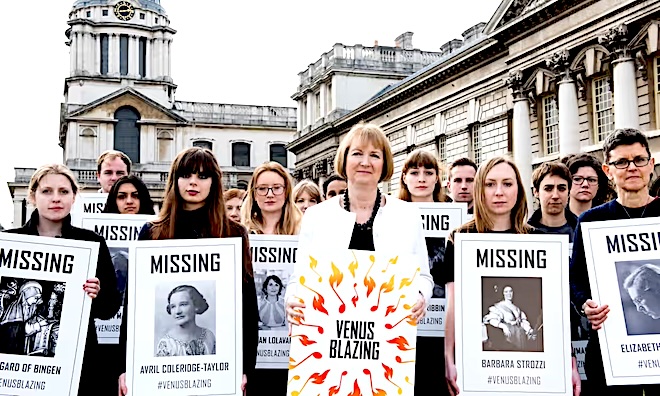
Harman – front and centre
We should get back to Harman and the implied undertaking.
Harriet Harman KC has been a Labour member of the UK Parliament since 1982, the year before the House of Lord dismissed her appeal against a finding of contempt of court. She is referred to as the “Mother of the House of Commons”.
She’s a former deputy leader and acting leader of the parliamentary Labour Party. Like all good socialists she is related to the aristocracy and a long-line of political heavyweights.
At the time of the contempt, she was a solicitor with the National Council of Civil Liberties. Her client, Mr Williams, had brought proceedings against the Home Office for false imprisonment.
Williams was granted discovery of a whole heap of Home Office documents and Harman agreed that they “should not be used for any other purpose except for the case in hand”.
However, 800 pages of the Home Office file were read out in court during the plaintiff’s opening address. The judge ruled that most of the material was inadmissible.
After the hearing Harman allowed David Leigh from The Guardian to inspect the documents in her office with a view to him reporting on a special “control unit” within the prison.
She considered that since the material had been read aloud in open court that it was no longer confidential. The Home Office thought otherwise and applied for the lawyer to be dealt with for contempt.
Findings of guilty stretched all the way to the House of Lords, where the majority held that the administration of justice required the implied undertaking of confidentiality be respected, even where the documents were revealed during a trial that was open to the public.
It was a ruling designed to protect the glory of the judicial patch against intrusion by ruffians of the press.
Harriet Harman took it to the European Commission of Human Rights, complaining that the decisions of the English courts interfered with her freedom of expression and freedom to provide information – further that she had been found guilty of a criminal offence that did not exist at the relevant time.
The government caved and agreed to a “friendly settlement” with a proposal that it would seek to change the law so that it would no longer be a contempt of court where documents disclosed to a party in civil proceedings were read in open court and then provided to someone else.
The government ended up paying Harriet’s costs of £36,320.
≈ ≈ ≈
The High Court grappled with the issue in Hearne v Street (2008), where Smiler along with Hayne, Dicey, and Crennan all agreed that the implied undertaking is a substantial legal obligation.
The case concerned complaints from Luna Park neighbours in North Sydney about noise from music, loudspeaker announcements, and “the screams and shrieks of patrons using the rides offered”.

Luna Park: noisy
Management people from Luna Park had given affidavits from some of the residents to the Daily Telegraph, described as “a mass circulation newspaper”. The headline was “The NUMBY files” (not under my balcony) and detailed “bizarre” claims about disrupted violin lessons, entrapped Chinese herbal medicine fumes, and daughters who smoke.
Extracts from a noise report and an affidavit from a neighbour were also sent to the Minister for Tourism – in breach of the implied undertaking.
The High Court was not amused – sacred documents for the process of the court should not be used for entertainment for anything in “mass circulation”.
More recently, in 2020, the NSW Supreme Court dealt with Mark Smith, a solicitor, who acted for a gentleman wrongly accused of exposing himself to young girls on the cruise liner Carnival Spirit.
Following a notice to produce Carnival supplied to Smith CCTV footage of the interior of the cruise ship. Carnival’s lawyers reminded him of the “usual undertakings as to purpose and confidentiality”.
Smith also gave an express undertaking that the footage would not be used outside the litigation. However, Smith’s client, Mr Sun did an interview with Channel Nine’s A Current Affair which asked for access to the closed circuit material.
At the request of the TV camera operator, Smith was filmed at his desk watching the footage on his computer. At the time, he said, the undertaking had not occured to him.
Carnival’s lawyers were hot on the phone after seeing promotional material about the upcoming story on ACA. Nine agreed not to use the footage.
Smith was pinged by the Prothonotary and got slapped with a $15,000 fine and costs of $50,000.
≈ ≈ ≈
Judge Judith Gibson in a District Court defamation case, involving a couple who had previously been married, found that the basis of the action arose from a psychologist’s report that had been produced under subpoena in the FCFC.
HH said:
“… as a matter of public policy no litigant, and no court, should not be put in a position where they have to countenance conduct potentially amounting to contempt of court and/or themselves act contrary to their own Harman obligations in the Federal Circuit and Family Court of Australia litigation.”
In theory at least, there are sound reasons why a litigant shouldn’t be permitted to sue for defamation where a Harman breach has occurred.
≈ ≈ ≈
Lehrmann and Auerbach bring to mind the Highwayman’s case in the first half of the eighteenth century.
Two robbers fought over the spoils of their work and asked a court to resolve the dispute, only for both of them to be hanged.