
Woolly reasons shorn
Justice Shaun McIlwaine of the Federales was described by Otto Abetz MP as the “Bret Walker of Launceston”.
That must have been Otto’s pitch for Shaun’s elevation to the bench.
Despite the plaudits from an antediluvian like Otto, Shaun has just been sheared by the Full Feds (Bromwich, Thawley and O’Sullivan) in Elanor Funds Management v Alceon Group Pty Ltd – a misleading and deceptive conduct case.
Elanor Funds Management purchased the Bluewater Square Shopping Centre in Redcliffe, Queensland. The vendor was Alceon, who appointed CPRAM Investments as one of the managers of the Bluewater Trust investment scheme, with the task of finding buyers for the centre.
Elanor argued that the vendor did not disclose rental arrears for tenants in the food court. When asked during a tenant review, CPRAM did not reveal there were any arrears.
If it had known the true position, Elanor would not have paid $55.25 million for the shopping centre. It would have recalculated what it was prepared to offer by excluding the income from nine “at risk” tenants.
It submitted the real value of the centre was $49 million, with an adjustment of $650,000 for a rental guarantee. Elanor claimed a loss of $5.6 million.
Since anything less than $55.25 was not acceptable to Alceon, the sale would not have gone ahead.
McIlwaine J thought there was no misleading or deceptive conduct since Elanor “assumed” the risk that the data that failed to disclose rental arrears was inaccurate and that it should have better investigated the slow paying tenants in the food court.
He thought the primary reason for the acquisition of the centre was for its redevelopment potential and he concluded no loss was suffered because got Elanor for a remarkable deal.
The Fulls said that “each of the trial judges three reasons for dismissing Manor’s claim was affected by error”. They calculated the real value of the property was $51.65, with the agreed adjustment of $650,000. Damages of $2.95 were awarded.
Trouble at the food court
Traffic around the Federal Court has it that Justice McIlwaine does not spare the rod when determining appeals from the work of other judges. CJ Debbie Mortimer is aware of this.
Last we read about the “Bret Walker of Launceston” was that he was twiddling the mandatory requirements of concerns notices in defamation actions.
See: Gazette of Law & Journalism – Cooper v Nine Entertainment Co Pty Ltd

Lessons for star teacher
As a result of ordering the reregistration of a struck-off teacher, AAT Deputy President Peter Britten-Jones got six of the best from the Federal Court’s Timothy McEvoy J.
The Victorian Institution of Teaching appealed against Britten-Jones findings and orders to reinstate Georgina Rachelle to the roll of teachers, arguing that Britten-Jones had not properly considered the relevant legislation governing the regulation of the teaching profession and failed to get to grips with the evidence presented to him.
Things went awry when Georgina relocated to New Zealand and was granted a teaching ticket. A year later she was handed a drink driving conviction and then a second one 14 months after that.
She forgot to disclose these convictions to the Teaching Council of New Zealand and her ticket was torn-up. In August 2019 she made an application for her teaching registration to be renewed in Victoria, without disclosing the troubles in NZ. She had previous taught at Scotch College and Star of the Sea.
She came back to Australia in April 25, 2021, and a day later was charged with three counts of making threats to kill and one count of using a carriage service to menace.
In November that year a further six charges arrived – several counts of contravening a family violence order and using a carriage service to harass – based on complaints made by Ms Rachelle’s sister.
The Victorian Institute of Teaching cancelled her registration pursuant to the Trans-Tasman Mutual Recognition Act.
Deputy President Britten-Jones in the tribunal decided that Rachelle’s ability to teach was not affected by the drink driving offences, or her failure to disclose the offences.
As to the threats and breach of the family violence order, the charges were either dismissed, largely withdrawn, or she was fined without conviction.
According to an earlier finding by the County Court the case concerned “heated, colourful words between family members, but this fell short of proving the charges”.
Britten-Jones said there was no “probative evidence” to suggest the conduct was serious.
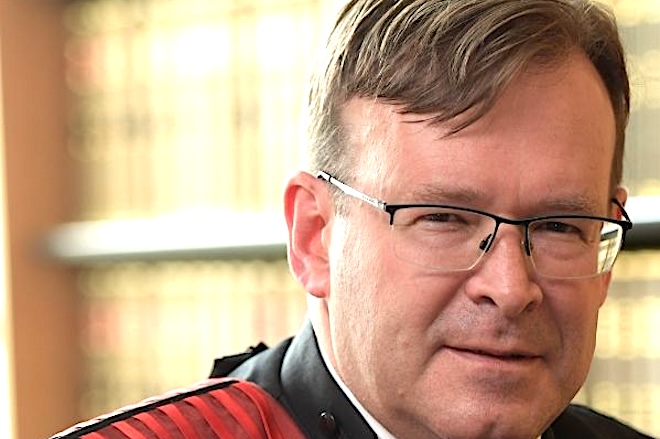
McEvoy J: appointed by The Very Rev. Christian Porter
It seems the tribunal failed to consider the audio recording of phone messages detailing the threats to kill. Apparently, the “heated, colourful” words arose because the respondent’s sister was accused of sleeping with Rachelle’s partner, which “ruined her life”.
Rachelle also made a self-assessment that she was a “capable and professional teacher”.
She appeared in person at the appeal, but according to McEvoy J did not “articulate a position in any direct manner in relation to the questions of law raised by the Institute …”
She refused an offer of pro bono assistance from the Victorian Bar “on the stated basis that to accept legal assistance in this matter would suppress her own voice”. In an earlier life McEvoy had appeared pro bono for Tony Abbott in a defamation case brought by John Setka.
It was also accepted that the tribunal failed to take account of the wellbeing and safety factors specified in the Education and Training Reform Act 2006 (Vic).
Rachelle also wanted $500,000 damages from the Institute for “victimisation, bullying, harassment and defamation”.
After combing through all the issues HH had this to say about the AAT’s workmanship:
“In all the circumstances, and unassisted by any substantive submission to the contrary by Ms Rachelle, I accept the Institute’s submission that the Tribunal’s conclusion that Ms Rachelle’s self-assessment of being a good teacher comprised ‘probative evidence’ of her fitness to teach and that ‘her character, reputation and conduct are such that she should be allowed to teach’ was illogical, irrational or otherwise not open on the evidence. I accept that this finding also, in all the circumstances, lacked an evident and intelligible justification.”
Ouch.
Victorian Institute of Teaching v Rachelle
Senior member quashed

Justice Rangiah: on board for review of Senior Member Bellamy’s migration decision
Senior AAT Member Rebecca Bellamy has been mentioned recently in our dispatches, here and here.
Her findings in LLQQ and The Minister were reviewed by Justice Fiona Meagher in the FCA, where the Minister smartly rolled over and conceded that Bellamy denied the applicant procedural fairness at the hearing of his merits review application.
LLQQ, who was unrepresented, was not advised about his right to invoke the privilege against self-incrimination, resulting in answers that were relied on by Bellamy in making her decision.
Because the government conceded the first ground, it was unnecessary to go into the other missteps, including: apprehended bias and illogical and irrational reasoning.
Justice Meagher quashed the tribunal’s decision, directed that it be removed from publication online, ordered costs for the applicant and sent it back for another try.
≈ ≈ ≈
We also reported SM Bellamy’s pejorative swipe at lawyers in the Leo’o Olo case – claiming they lack integrity because they bring dishonest migration claims just so they can make money.
She contended that cases like Leo’o Olo are a waste of time and are unwinnable.
See: Alovale Junior Leo’o Olo and Minister for Rejections and Deportations
The inference appeared to be that lawyers shouldn’t even try to win difficult cases with the material at their disposal and that applicants should accept the ukase of the minister’s delegate.
Senior Member Bellamy didn’t want to “waste time” by going into too many details, suggesting the Federal Court on appeal might clarify the extent “to which the tribunal should engage with material that is obviously lacking in merit”.
In saying this she overlooked a long-established principle in migration law:
“A decision maker does not have to have rebutting evidence available before he or she can lawfully hold that a particular factual assertion by an applicant is not make out.”
See: Peter Heerey J in Selvadurai v Minister for Immigration
Needless to say, the Murdoch press tried to make hay with these pungent observations from the tribunal.
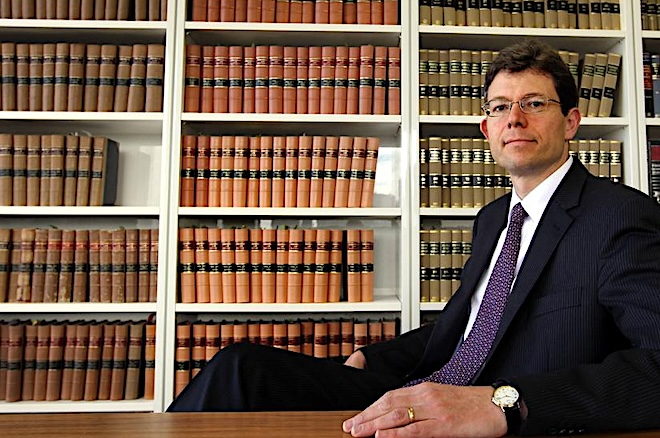
Moshinsky J: identified apprehended bias arising from attack on legal representatives
Mark Moshinsky J suggested a serious attack by the tribunal on the professional conduct of an applicant’s lawyer could give rise to apprehended bias:
“Further, the member made a serious attack on the professional conduct of the applicant’s lawyer in the preparation of the appellant’s evidence. Whether or not this was justified (and I do not think it was), it might reasonably be apprehended by a fair-minded lay person that the member was so influenced by what he perceived to be the lawyer’s improper or inappropriate conduct, that he might not bring an impartial mind to his assessment of the appellant’s case.”
See: MZZLO v Minister for Immigration and Border Protection (No 2)
There’s plenty of grist for Mr Leo’o Olo’s judicial review application, which will be heard by Justice Darryl Rangiah on December 12.