Victorian Supremo Justice Melinda Richards has sentenced an ex-solicitor to a 30-day stretch of porridge – suspended for two years – after he was found to be repeatedly in contempt while his firm was under management.
Johnathan Bowers-Taylor was the principle of JBT Lawyers. In 2023, he failed to renew his ticket and the Victorian Legal Services Board appointed Damian Neylon as an interim manager of the firm.
On August 4, 2023, the Supreme Court granted orders prohibiting Bowers-Taylor from “preventing, obstructing or otherwise hindering” Neylon’s activities.
Fifteen days later, the board commenced proceedings against Bowers-Taylor after he failed to give Neylon access to the firm’s computer server. Though he was found in contempt of the court’s orders, he avoided a birching.
In October, the board initiated a second set of proceedings against Bowers-Taylor after it was discovered that he was conducting a case in the Supreme Court – without a practising certificate and without the knowledge of the manager of his law shop.
Bowers-Taylor was acting for the plaintiff in Ming He Wang v Commissioner of State Revenue (S ECI 2023 0488), and took steps to hide his involvement from Neylon, who was responsible for the remainder of the firm’s open cases.
In emails to Liam McCrae, the senior solicitor of the State Revenue Office, Bowers-Taylor blamed “medical issues” for tardy affidavit submissions. He also described the process of regaining entry to RedCrest (the Supreme Court’s digital filing platform) as “Monty Pythonesque”.
At one point, Bowers-Taylor invoiced the client $13,200 with instructions to pay the amount by direct deposit into what turned out his own personal bank account.
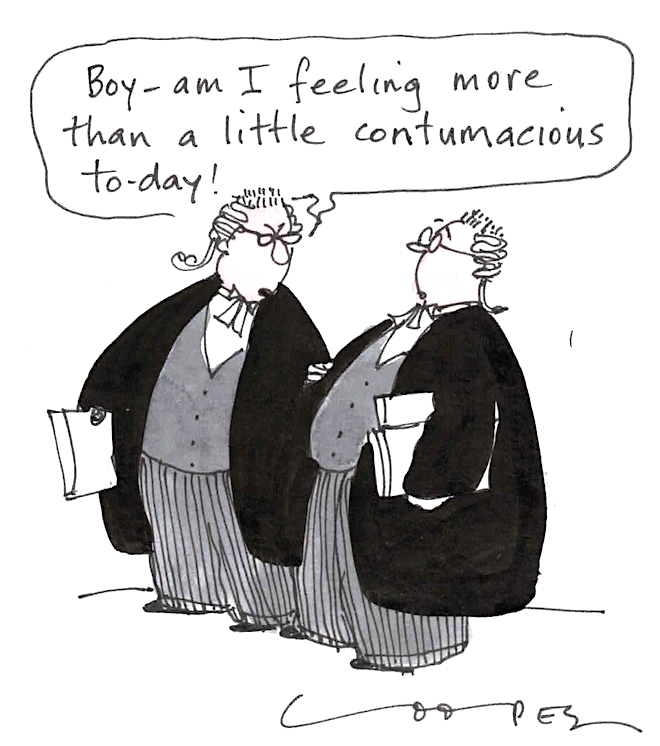
Though he argued that the breaches were “trivial,” HH decided to record the contempt as a criminal conviction, as it was in repeated and contumacious disobedience to the Court.
His actions revealed a “perverse and obstinate” resistance to authority which wasted his client’s, and the court’s, time and resources. It prevented the firm’s manager from transferring the case to a qualified practitioner, and the misconduct prolonged the trial by six months.
Another law shop has since taken up the plaintiff’s case.
HH also highlighted the damage done to the administration of justice when a member of the legal profession “flouts the court’s authority”.
When given the opportunity to express contrition for his actions, Bowers-Taylor responded with: “I am not able to say sorry because I would be lying.”
While handing down the prison sentence, Justice Richards emphasised the deterrence factor in making an example of practitioners acting in wilful contempt. The suspension of the sentence is conditional on Bowers-Taylor’s compliance with the original Supreme Court orders.