






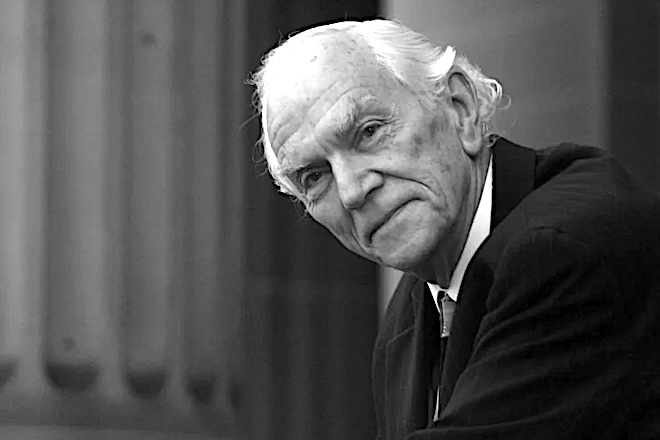
Chester Porter – complex
Gutsy Girls, a book by Dr Josie McSkimming, is about the life, loves and poetry of her sister Dorothy Porter, herein called Dod.
Josie, Dod and another sister, Mary are the daughters of Sydney barrister Chester Porter QC and his wife Jean Featherstone, who lived for 67 years in the same weatherboard house on three large blocks of land at Mona Vale.
The book weaves the fractured lives of the three sisters with Dod’s life, loves and poetry, splattered with startling revelations about the great barrister at home.
Chester famously went to the bar at the age of 21 in 1948 and ultimately became the go-to criminal defence brief. His big cases were legion – the Kalajzich murder trial; Judge John Foord who was charged with attempting to pervert the course of justice; the Voyager and Chamberlain Royal Commissions; Roger Rogerson charged with attempting to bribe undercover policeman Mick Drury; and numerous paedophile priests.
Peter Clyne, the defrocked barrister, explained what it was like being cross-examined by Porter:
“One moment you are cheerfully chatting away in the witness box. The next moment your head is rolling down the courtroom aisle. Your throat has been cut from ear to ear.”
Hence, the silk’s various honorifics: “Chester Porter Walks on Water” and “The Smiling Funnel Web”.
We are told that the kitchen cupboards at the Porter’s Mona Vale estate, “were always full of half-eaten packets of stale biscuits and chips, and long-expired boxes of jelly. Jean and Chester cared little for suburban household niceties and home-beautiful expectations”.
Instead, Chester was into farm animals – ducks, geese, hens, long-necked tortoises, guinea pigs and rabbits. He was also a committed bushwalker and bird-watcher.
On the weekend, he would be in yard-work attire – bare-chested, in short blue swimming trunks, with a large bowie knife around his waist on a belt.
“He was well read, had lots of funny quips he was fond of repeating, and could be charming and entertaining company, but the challenge for all three of us was the difference between Chester the well-known, highly regarded public figure and Chester in his private life, where all his personal demons emerged and erupted.
He was unfailingly helpful to other people – young barristers trying to make their way, unhappy secretaries and senior legal counsel who found themselves in a spot of bother. They all sang his praises when he died, saying how kind he was to them, how he in effect saved their careers. I would say sweetly, ‘That’s lovely to hear, while thinking, You never saw the other side.”
Hair-raising apoplectic rages seemed to be his thing, where he would lash out and deliver a “belting”. But we have to understand that Chester suffered irritable bowel syndrome all his life.
At one stage he threatened to sue Dod unless she withdrew a poem inhabited by two characters called “Wystan” and “Chester”. She insisted it had nothing to do with her father, but altered it nonetheless.
“She felt she had no choice but to continue to play her part in bulwarking Chester’s fragile ego.”
Other aspects of the domestic arrangements at the Porter household were eccentric.
Chester would drive the girls to school, dropping them off at 6.30 am so he could be in his chambers by seven. Out of sheer boredom they would eat their lunches while waiting for the school to begin.
It emerged that Chester hated Bob Hawke and John Howard – Howard, “the serial liar”, was particularly loathed. After the defeat by Kevin Rudd in 2007, he wrote:
“It is the end of eleven years of shame, that we as a nation could even have elected such a bunch of cruel incompetent creeps.”
Porter was unaware that his mother was Jewish until after he arrived at the bar. When Josie told her cousin that they were Jewish, Chester accused her of being, “a bloody little tattletale. You just never know when to shut up”.
His parents, Coralie and Fred Porter, are described by Josie as “problem parents” and that Coralie’s influence was “toxic”. She tried to meddle in Chester and Jean’s wedding, leading the bride to wonder while taking her wedding vows, “What on earth am I doing?”
Chester “only barely survived” his parent’s household because he was allowed to keep two beautiful cocker spaniels.
Later, as a married man, he would field his mother’s phone calls with her tedious complaints about the black spots on her roses and the rudeness of shop girls. She could sense Chester was not really listening:
“I had to go through it Chester. The least you can do is listen.”
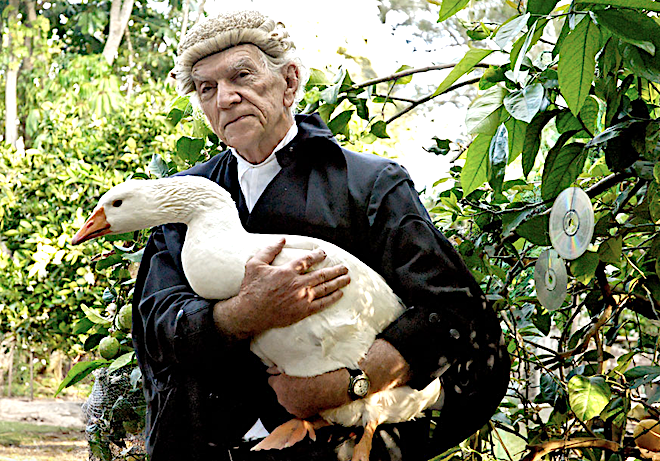
Chester Porter – photographed by Mark Tedeschi KC
The Porters and the Tedeschi families were great friends, with shared holidays in the Blue Mountains.
Chester once invited Mark Tedeschi, later to become a leading prosecutor with the office of the DPP, to punch him in the stomach as hard as he could.
He did, winding Chester in the process, who then threw young Tedeschi through a flimsy wall amid a “splintering array of asbestos”.
Mark and Dod Porter in 1969 started a “passionate love affair by mail”.
The Porter family dynamic was complex. Jean didn’t do anything without first considering Chester’s reaction. She loved him and never regarded herself as an “abused wife or considered that what we experienced might be called family violence”.
Chester was steadily gaining repute as a barrister, yet he had “no capacity to deal with his adolescent daughters, and his frequent sexist comments were confronting and unbearable”.
Josie, a social worker and psychotherapist, had an especially spiky relationship with her father, which she has not hesitated to vent in the book.
“During Chester’s life we assiduously guarded his reputation and kept our mouths shut. Now, there is a familiar rising guilt as I write about his rages in bald terms. My elder son, Sam, laughingly says we three sisters all had ‘Daddy issues’, which is not wrong.”
After Mary and her husband split up she moved back home, which shocked Josie “after the horrors of her adolescence, when she had felt so despised by Chester and fought with him so bitterly”.
“Now twenty-eight, she was playing by the rules Jean had consistently modelled to us: shut down the protest and find a path of appeasement and agreement. It was a reasonable, strategic move from Mary, who was worn out and broken by years of misery.”
[snip]
“The purpose of our family life was always to support and preserve Chester’s pride and fragile sense of self, no matter what it cost us.”
Chester’s instruction in his book The Gentle Art of Persuasion for barristers not to lose their temper, caused great bemusement back home.
Each of the three sisters “was trying in her own way to manage the long-term effects and trauma of Chester’s unpredictable bouts of rage … We all lived good, brave outwardly successful lives, but we also carried well-hidden wounds and scars: the legacy of Chester and Coralie.”
Chester died in 2021 at ninety-five. His ashes were spread under the ancient mangrove tree at Pittwater. It turned into an horrific scene as Josie accidentally dropped the box containing Chester’s remains into the water.
“His ashes had turned into concrete which we then had to claw out of the box … I couldn’t leave lumps of him in the water. I broke him up with my hands. We blasphemed crazily …”