



The Six
In the old Chief Secretary’s Building that is a relic of colonial New South Wales, an exploration of the state’s more recent history has been unfolding this year. Now a venue for judicial inquiries, the building has seen a succession of retired policemen come to testify about events in 1979-80.
In that era of shaggy male haircuts and flares, large amounts of cash whizzed around payrolls, tills and small bank branches, attracting the attention of hold-up men and safe-crackers and in turn leading to formation of powerful detective squads in the Central Investigation Branch to hit them.
It was, as criminologist Robert A. Dielenberg has written, the tail end of an era of “physical” policing aimed at “putting a man in cuffs.” While this battle raged on the streets, Dielenberg says:
“A gentleman-like status quo driven corruption prevailed, extending all the way up to government and back down again.”
The detectives from that time are all in their late 70s and early 80s. While many required walking sticks and other aids, it was not hard to imagine them as the young hulks they were in their CIB days.
Now a judicial inquiry has pulled them out of retirement back to matters that had taken most of them out of their usual work of dealing with criminals into alleged political violence involving ancient Balkan rivalries and hatreds.
This was the “Croatian Six” case, which at the time looked like the biggest terrorism plot in Australia’s history, and now to many looks more like its biggest miscarriage of justice.
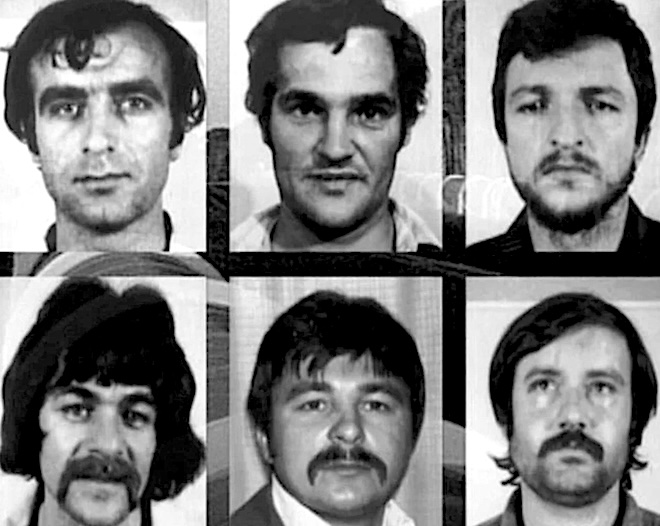
The six young Croatian-Australian tradies – Maksimilian Bebic, Mile Nekic, Vjekoslav Brajkovic, Anton Zvirotic, Ilija Kokotovic and Joseph Kokotovic – each got 15-year jail terms from NSW Supreme Court justice Victor Maxwell in February 1980, after an extremely long trial.
They failed in their appeals to the Court of Criminal Appeal and the High Court of Australia.
The jury accepted the police evidence that all were engaged in a plot to plant bombs around Sydney in the cause of Croatian independence from the then Yugoslavia of Josef Tito’s communist regime.
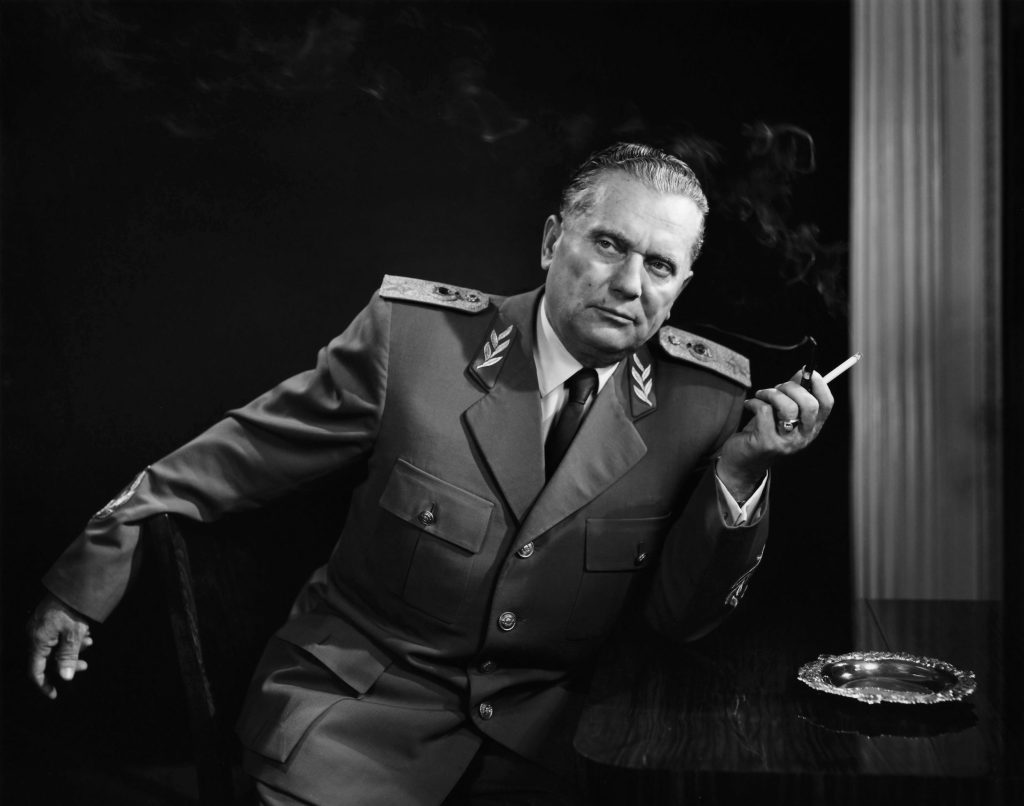
Tito: strong man of Yugoslavia
The plot was thwarted at the last minute when another alleged plotter, Vico Virkez, said he had misgivings and tipped off police on February 8, 1979.
A hurried raid on the Lithgow house of Virkez and tenant Bebic indeed found crude gelignite bombs loaded up in Virkez’s Valiant.
They gave the police more names under questioning, leading to raids on three houses across Sydney where the other accused were allegedly found in possession of gelignite, detonators and improvised timers.
But ASIO records released in early 2018 showed security service phone taps had found Virkez in touch over the previous six months with an official at the Yugoslav Consulate-General in Sydney whom ASIO believed to be an officer of the Yugoslav Intelligence Service, commonly known as the UDBa.
Not only that, about two weeks after the arrests, this information had been relayed to an assistant commissioner of the NSW Police, Roy Whitelaw, along with the assessment that Virkez was an agent or possibly even an officer of Yugoslav intelligence.
Whitelaw told ASIO he was worried this information would “blow a hole” in the police case if it got to the “opposition” – i.e. defence counsel.
ASIO said he could tell police prosecutors about it, as long as it wasn’t sourced to them. But it never surfaced at the trial or appeal, with the Crown prosecutor David Shillington QC assuring the jury there was “not a skerrick of evidence” that Virkez was a Yugoslav agent.
The ASIO documents helped a fourth application for a judicial inquiry into the convictions of the Croatian Six. After significant opposition by Solicitor-General Michael Sexton’s legal team, including David Kell SC and Joanna Davidson, in August 2022, Justice Robertson Wright ordered an inquiry.
He cited “questions or doubts” about several aspects, including the truth of Virkez’s evidence for the Crown, the confessions and physical evidence allegedly got by police in the Sydney raids, and the alleged withholding of crucial evidence from the defence.
Chief Justice Andrew Bell appointed Acting Justice Robert Hulme in March last year to conduct the inquiry, a choice of a lawyer and retired Supreme Court justice well versed in criminal law from both defence and prosecution sides.
Hulme had an early-career exposure to a dodgy police operation when acting as secretary in Justice James Wood’s 1984 inquiry into the Ananda Marg trio’s conviction.
Hearing of witnesses began last December. So far, the inquiry has heard 40 days of testimony, with another six days set for early November, before submissions are made over December to early March.
Documentation is piling up, as a result of searches ordered by the inquiry, digitised for handy reference on screen, while proceedings are live-screened.
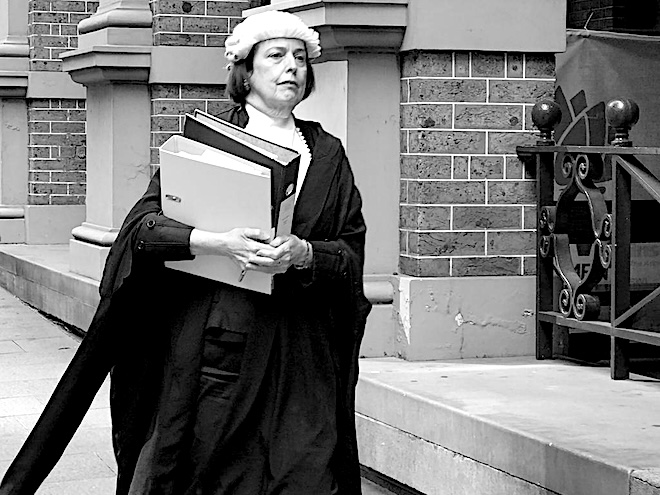
Trish McDonald SC: counsel assisting
Facing Hulme are four rows of legal talent.
In front is counsel assisting the inquiry Trish McDonald SC and a big team of juniors and solicitors. Alongside are the team representing three of the Croatian Six (Bebic, Brajkovic and the late Mile Nekic, who died in late 2022): David Buchanan SC, a defence counsel in the original trial who has come out of retirement for the inquiry, Sebastian De Brennan, who led the application for review, and solicitor Sharon Ramsden from Marsdens.
In the second row are Greg Woods KC, together with a number of juniors, hired by the NSW Police Association to represent some 20 of the survivors among the arresting police, and Gabrielle Bashir SC, separately representing former police detective James Bennett, until recently a senior judge of the NSW District Court and still one of its acting judges.
On the third and fourth rows are Alex Brown, for the NSW Director of Public Prosecutions, and Catherine Gleeson SC for the NSW Police Commissioner (who recently subbed in for former President of the Bar Association, Jane Needham SC, who was elevated to the Federal Court), plus numerous supporting lawyers, while ASIO (and latterly the Department of Prime Minister and Cabinet) are represented by Peter Nelikan and Jake Silove.
Their fees must be chewing up a bomb, except for Buchanan, De Brennan and Sharon Ramsden, who are being funded on drip-feed by the Croatian-Australian community and other crowd-sourcing, although have been appearing largely pro bono.
The role of the former Special Branch of the NSW Police came under particular scrutiny, as its officers and alumni played key roles.
Assistant Commissioner Whitelaw, who had previously been head of the Special Branch, has passed on, as has Inspector John Perrin, its head at the time of the arrests. But Victor Jefferies, then its Croatian specialist, is alive and stood up to several days of questioning.
He was quizzed repeatedly about his interview with Virkez in Lithgow two days after the arrests, in which he says he quickly deduced from his real name, Vitomir Misimovic, that he was not a Croat but a Serb. Virkez admitted warning the Yugoslav consulate as well as the police and earlier giving it reports on Croatian activism, but denied contact with UDBa.
Jefferies said he wrote all this up in a report which he gave to Inspector Perrin and showed to Detective-Sergeant Ted Turner, who led the Lithgow raid and then was putting the police brief of evidence together.
But it didn’t pique his interest to explore further whether Virkez was an agent provocateur or putting together a “false flag” operation. Nor did Alister Milroy (in late career chief of the Australian Crime Commission), who took part in the Lithgow raid and then helped Turner prepare the police brief, feel the need to delve into Virkez’s double life when preparing an “antecedents” or background report on him.
In addition, Jefferies said the ASIO and other security information from Canberra in February-March 1979 about Virkez’s links to the Yugoslav Consulate would have been circulated to Special Branch, and shown to him as the officer watching the Croatian community.
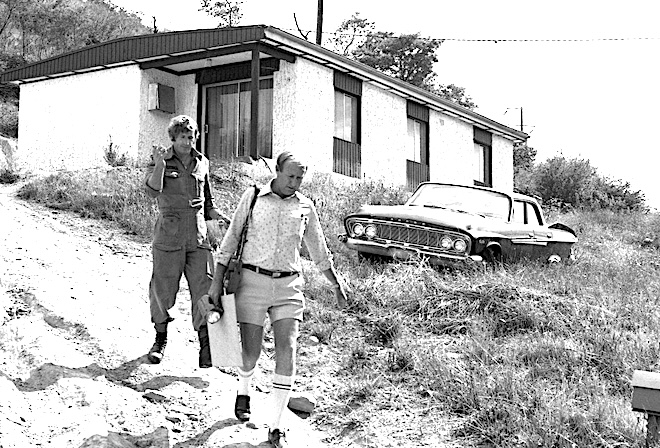
Police raid the Lithgow house, 1979
None of this emerged in statements and testimony at the committal hearing for the Croatian Six in August 1979, according to transcripts shown to him by counsel assisting.
Jefferies had even denied then that he had written a report on the meeting, or that it had revealed intriguing new information. Why? He’d been in the witness box a long time and was “slightly confused”.
Jefferies also said he had probably drawn out the names of the Kokotovic brothers and Mile Nekic from Special Branch records to add to Brajkovic and Zvirotic given by Virkez in Lithgow on February 8, 1979.
This list had been passed to teams hurriedly assembled at the CIB to fan out on the raids across Sydney late that evening.
But Jefferies denied that he and his chief, Inspector Perrin, had seen this as an opportunity to “roll up” these troublesome members of a strident new activist group, the Croatian Republican Party. These young nationalists had mounted heated demonstrations at Yugoslav national day events, and at one stage had nearly rolled a police car containing Perrin when he arrested Brajkovic at a demo outside the Yugoslav consulate.
The ex-CIB stalwarts who appeared all stood by their evidence at the trial, despite hazy memories after 45 years since the arrests. Yes, they had found the gelignite at the Sydney homes. No, the defendants had not been bashed during questioning back at the CIB offices in the old Remington Building facing Hyde Park. Yes, their evidence of confessions were typed out truthfully.
They had heard the term “verballing” – but mostly from defence lawyers trying to wriggle their clients out of confessions. Never done it myself, or seen it done. Same for “loading up” suspects with guns, explosives or drugs. Same for bashing. If they noticed the Wood Royal Commission report on police corruption in 1997, they were shocked or felt it generalised isolated incidents. Some still attended an ex-CIB get-together held three times a year; while they may have told each other they had been summoned to the inquiry, they did not discuss what they were going to say.
The term “scrum-down” found by Wood to be a police term for officers conferring on their evidence ahead of trials, a practice that could be used for both good or bad, got a lot of questions put to the ex-detectives. Most looked baffled.
Yet the dogged counsel assisting, Trish McDonald, found a hint of one example.
After his arrest and questioning, Brajkovic had shown signs of a severe bashing to medical staff at Long Bay Jail, whose testimony at a voir dire hearing during the trial caused Justice Maxwell to throw out the “admissions” police swore he had made voluntarily.
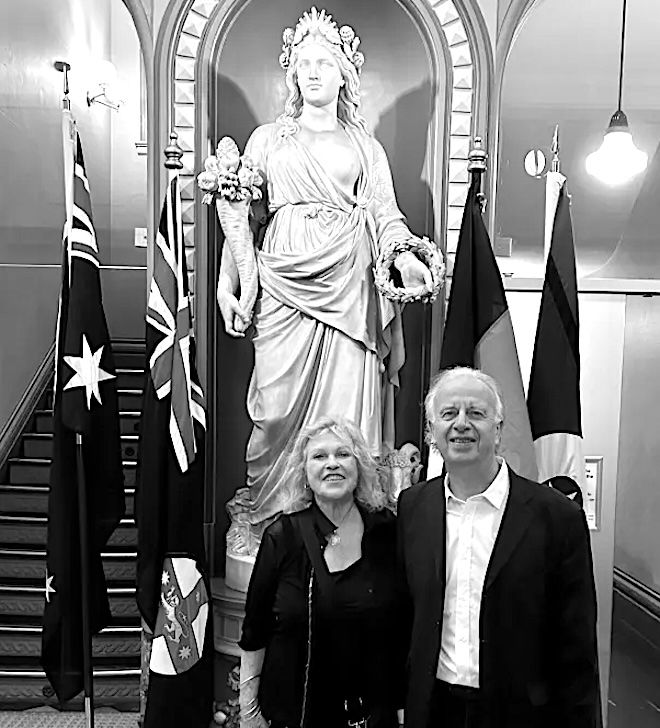
Ina Vukic with journalist Hamish McDonald at the Chief Secretary’s Building, Sydney
Brajkovic wrote to Premier Neville Wran, who also held the police portfolio, and the police Internal Affairs Branch was ordered to investigate.
McDonald found it “beyond coincidence” that in the responses of four officers ordered to reply to Internal Affairs, all used almost identical language to allege Brajkovic must have taken the blows in a deliberate plot by the prisoners, sometime between being put in the cells after questioning and delivery to Long Bay, to discredit police. “This is an instance of a scrum, for corrupt purposes,” she put to one of the officers, to his denial.
As for media interviews by Roger Rogerson, who led one of the Croatian Six raids, that verballing and loading were standard procedure, this was just big talk. They had never seen him practice it; he had gone bad only after being transferred out of the CIB. Rogerson died in January this year, serving a life sentence for murder.
The testimony emphasised the general lack of what nowadays would be considered detective work. None of the explosive material allegedly seized in the Sydney raids was fingerprinted, or photographed in situ. Only the Scientific Squad had cameras, and they had gone home for the night. There were differing accounts about where these explosives were stored. For raids supposedly targeted at suspected terrorist bases — possibly rigged with trip wires, booby traps and primed explosives – the CIB squads did not take extra precautions like calling in army experts or clearing neighbourhoods.
If any of the officers had thought of breaking ranks, and confessing to concocting evidence or other offences, Hulme at one point reminded the inquiry that unlike a royal commission, an inquiry like this under section 79(1)of the Crimes (Appeal and Review) Act 2001 gave him no powers to compel answers or to grant certificates of immunity against self-incrimination. “It’s an unfortunate state of affairs,” Hulme said. “I do not understand why parliament would choose to exclude the power, but they have.”
The last three days of hearings gave veteran lawyer Ian Cunliffe the chance he’d been waiting over 40 years to expound in a court about questionable handling of the Croatian Six case by Commonwealth police and security officials. Cunliffe had been a middle-ranking legal advisor in the Department of Prime Minister and Cabinet in March 1980. Earlier he had been attached to Justice Robert Hope’s inquiry into the intelligence agencies.
The case came across his desk in the form of a letter from Parramatta Jail by Virkez addressed to the prime minister, Malcolm Fraser. It pointed to negotiations under way between Virkez and prosecutors: as these worked out over following weeks, he would plead guilty in a separate trial, receive a short sentence, then testify for the Crown against the other six, in return for early release and deportation back to Yugoslavia.
Cunliffe detailed how at a high-level interdepartmental committee, a Commonwealth Police civilian intelligence official, the late Roger Cavanagh, had said evidence about the Yugoslav intelligence connections of Virkez would be made to disappear if subpoenaed, that Turner, the NSW police officer running the brief of evidence, was not interested anyway, and that Crown prosecutor Shillington was “fully informed”.
Later when he read a press report of Shillington’s “not a skerrick” comment, Cunliffe contacted a defence counsel preparing an appeal. He got a subpoena to appear, but was not ultimately called despite standing by. After taking up a new job as secretary of the Australian Law Reform Commission, Cunliffe raised his concerns about miscarriage of justice directly to the Hawke government’s attorney-general, Gareth Evans, who passed him to senior legal official Tom Sherman who showed him the relevant files.
But Sherman’s report said Cunliffe was satisfied that all relevant documents had been provided to the court. “I am very confident I didn’t say that,” Cunliffe told the inquiry.
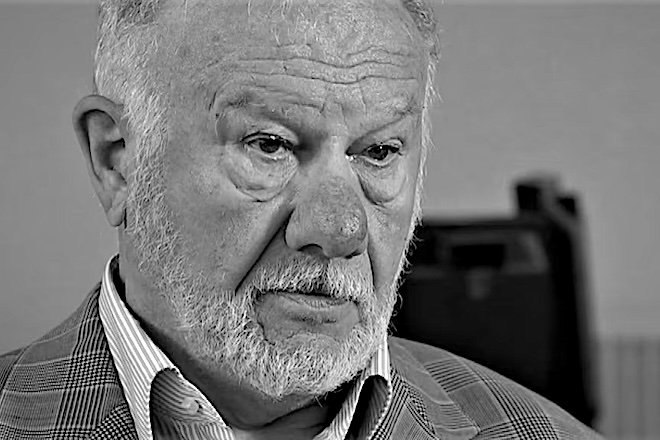
Cunliffe: raised concerns with Gareth Evans
Instead he was expecting a full federal inquiry to follow. But that didn’t happen, despite further confidential correspondence involving Evans’ successor, Lionel Bowen.
More twists in this strange saga can be expected in the next tranche of hearings, before counsel assisting gets down to writing her written submission for circulation mid-December.
The petitioners and other parties respond in January and February, and then all make final oral submissions over 5-7 March. It’s then up to Acting Justice Hulme.
Hamish McDonald is a journalist and former foreign editor of The Sydney Morning Herald and The Saturday Paper. He has worked in Hong Kong, India and South East Asia. He’s the author of Reasonable Doubt: Spies, Police and the Croatian Six
Correction
NSW Solicitor General Michael Sexton SC writes to say that neither Dr Kell, who is the NSW Crown Advocate and an independent statutory officer, nor Ms Davidson, who is a member of the NSW Bar, were part of any legal team under my direction. I have had no involvement in any of the steps leading up to the inquiry nor in the inquiry itself.