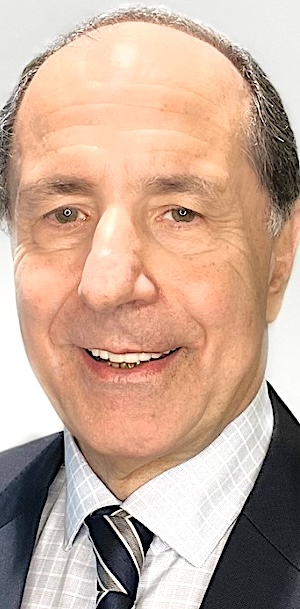
In the NSW Supreme Court, Justice Richard Cavanagh quashed a professional negligence action against solicitor Anthony Malouf, the brother and former practising partner of Gerard Malouf of personal injury fame.
The claim was brought by two medical imaging companies, Victorian X-Ray Group (VXG) Dandenong and VXG Boronia, and their sole director Bevyn White.
Between 2016 and 2019, the plaintiffs engaged Malouf’s commercial law shop in a dispute against Philips Electronics Australia.
The trouble arose after the VXG companies, including VXG Balwyn which was placed into liquidation in 2017, fell behind on payments owed to Philips under machine service agreements.
Philips brought debt actions against the VXG companies, which were defended by Malouf. The defence cases, including appeals, were unsuccessful.
In the VXG Balwyn proceeding alone, the company was ordered to pay $192,426.88 to Philips, with costs ordered on an indemnity basis. VXG Dandenong also was ordered to pay $85,940.49 with costs to Philips.
The plaintiffs then sued Malouf in tort and contract for legal costs paid to the firm and to Philips during the unsuccessful litigation.
They alleged that Malouf should have realised that their defences were hopeless, and that they had no reasonable basis to defend the case.
Under Sch 2 Cl 2 of the Legal Profession Uniform Law Application Act 2014, a solicitor must not act for a client unless there is a reasonable prospect of success.
If a solicitor considers that a proposed defence has no prospects of success, they are obliged to warn the client.
In the Balwyn matter, Malouf submitted a defence based on an affidavit by Bevyn White which asserted that one of the service agreements had been orally varied. This oral variation was said to have occurred between White and Mr Damen, a representative of Philips.
However, while Malouf was cross-examined, it was discovered that he had not actually read the services agreements, and so was unaware while filing the defence that the agreements contained “no variation” clauses, which barred oral variation.
White’s claim was that, if Malouf had read the service agreements, he would have formed the view that the defences were doomed, because oral variations were precluded.
Malouf successfully defeated this claim, citing authorities (including the recent case of Flynn v PPK Mining Equipment Pty Ltd (No 2) to the effect that “a ‘no oral modification’ clause cannot prevent the parties to a contract from agreeing to orally vary it”.
HH also concluded that not reading the services agreements was, while unwise, not negligent, as the duties imposed on a solicitor should not be so onerous as to prevent them from exercising their judgement in a practical and cost-effective way.
There was also evidenced that White was disabused of any false expectations of success, as Malouf and counsel consistently reminded him of the risks and difficulties associated with the defences filed.

Fermanis: client needs to get outUltimately, it was ruled that the Philips cases weren’t lost because of the oral variation clause, but because of White’s poor credibility as a witness.
Barrister Luke Fermanis, briefed for the Dandenong matter, was quoted as having told White:
“You need to get out of this litigation … you’re hanging your whole case about being believed about your conversation with Damen and getting past the fact that nothing got put in writing.”
Throughout the VXG cases, White was resistant to negotiations. He responded to the pessimistic advice of his legal team with criticism and a disinclination to pay their legal fees, and was also argumentative in cross-examination.
After throwing out the actions, Cavanagh J ruled the plaintiffs were to pay Malouf’s costs.