


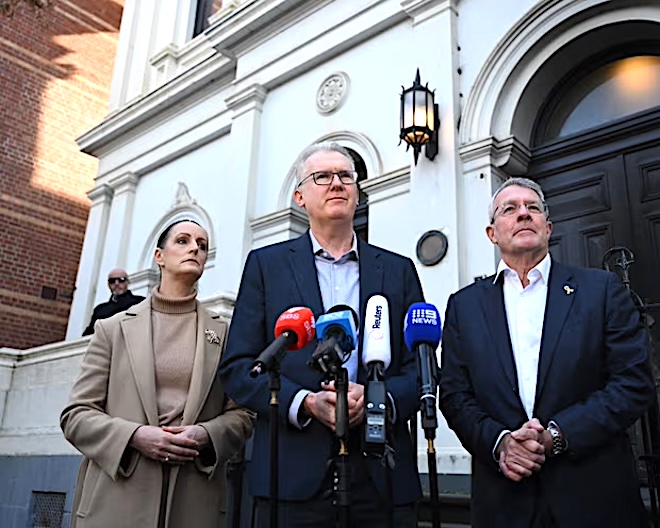
There was former AG Mark Dreyfus dragged out of the shadows by Home Affairs Minister Tony Burke on Sunday (July 6) to ramp-up condemnation of the Melbourne synagogue fire.
As a leading Jewish member of the parliamentary Labor Party Dreyfus still has a role to play in these set piece events. Alas, the door has slammed shut on his more lasting contribution as Attorney General.
His downfall has been attributed to the intervention of Deputy PM Richard Marles, who wanted his picks from Victoria’s right faction to take their place in the Albanese government after the May election.
Before the election, there were four cabinet ministers from the Vic Right: Marles, Bill Shorten, Mark Dreyfus and Clare O’Neil.
When Shorten retired at the end of last year he was replaced by Anika Wells from the Queensland Right, who is now the Minister for Communications and Sport.
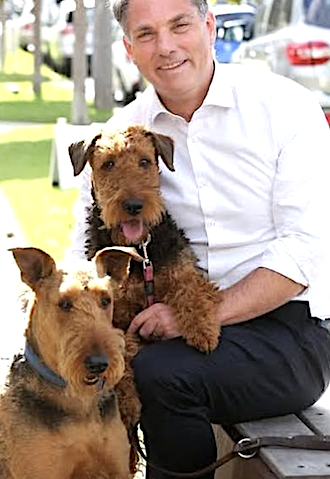
When Dreyfus was unceremoniously dumped post-election from the Right’s ticket he was replaced by Marles pick, the unheard of Sam Rae, who entered parliament in 2022 as the member for Hawke and is now in charge of aged care and seniors as a junior minister, well outside the orbit of cabinet.
So, the Victorian Right has gone from four cabinet members prior to the election to two after the triumphant May vote: Marles and O’Neil.
Normal people find this puzzling – particularly as the ALP government in Victoria needs as much leg-up as it can get from the bruvvers in Canberra.
There’s no two ways about it – Dreyfus was treated abominably. He loved being Attorney General and was given reassurances before the election by the powers-that-be that he would continue in the post.
Our sources say that Dreyfus has not been promised a diplomatic post and he would be disinclined to take one. Both his mother and his wife died relatively recently, he has two sons, a daughter, and six grandchildren. His father, the composer George Dreyfus, is still here at 97.
Literally, in the time-honoured tradition, Mark will be spending more time with the family – unlike the the former assistant Treasurer Stephen Jones who’ll be heading to Paris as the Australian Ambassador to the OECD.
≈ ≈ ≈
Dreyfus had plenty of unfinished business as AG. He wanted further development on public interest disclosure, FOI, media freedom, family law, and privacy.
Progress in these areas had been achieved between 2022 and 2025 – although not as much as glued-on aficionados wanted. The difficulty for Dreyfus was that he was pretty much a lone voice in Cabinet on transparency and open government.
If he’d retained the job, Dreyfus would have pushed ahead to implement the outstanding recommendations Privacy Act review.
Also high on his agenda was the creation of a Commonwealth Judicial Commission, with an oversight of the federal judiciary, excluding the High Court because Their Highnesses are presumed to be perfect.
In family law, the FCFCOA review is due to be released soon, while the recent Family Relationships Services and the Family Law Council reports open the doors to more areas of reform. Work on renumbering the confusing Family Law Act waits in the shadows and is dependent on scarce drafting resources.
Both of the two significant slabs of public interest disclosure (whistleblower) legislation from 2013 and 2023 were Dreyfus’ birth children.
The Ombudsman reports that as a consequence there has been “a 95% increase in PID-related enquiries and a 76% increase in enquiries seeking assistance with the operation of the Public Interest Disclosure Act”.
In the years 2022-2023 there were 243 disclosures by Commonwealth officials or contractors that could involve illegal, corrupt, and deceptive conduct or maladministration – which met the legislative requirements that provide protection for whistleblowers.
Even though there is now a dedicated FOI commissioner, the Prime Minister in particular is no fan of allowing greater access to government information, or expanding whistleblower rights – it only causes trouble and why give media reptiles more room to poke their noses into the messy internal workings of the machinery of government.
The majority of Cabinet is probably relieved that Dreyfus, an irritant in the open-government space, has gone onto the shelf.
It is unlikely that Michelle Rowland, the new AG, will make much headway on whistleblowers or FOI.
Post-election Rowland’s department has been stripped of ASIO, the Federal Police, Protective Services, and the counter-terrorism regime – all handed to Home Affairs – although AGs is still retains responsibility for the Criminal Code.
Tony Burke has more power and oversight at Home Affairs than did Benito Dutton, and it is unlikely that Dreyfus would have accepted the removal of these agencies from his portfolio.
Particularly galling, has been the revelation that the former acting chief of staff to the Secretary of the Department of Home Affairs has been pinged by the sleepy National Anti Corruption Commission.
In a desperately wordy report the commission found that this official, who must be relieved not to have been named, gave her sister and her sister’s fiancé an improper benefit.
The fiancé was promoted as a candidate for a departmental job, a witness signature was forged, and the family relationship concealed by this senior executive service officer – plus the interview questions were kindly provided to the sister.
This was trumpeted by the commission on its second birthday as a marvellous instance of corruption busting.
An official from the Department of Immigration got a good behaviour bond after pleading guilty to one count of abuse of public office for approving her brother-in-law’s visa application and for unauthorised access to restricted data.
Home Affairs has the distinction of being identified by NACC and other agencies as being consistently blotched with corrupt conduct.
Even Dreyfus would acknowledge that Major Gen. The Hon. Paul Brereton AM, RFD, SC has been a dud choice as the inaugural grand poobah of the NACC – overly cautious, slow, averse to public hearings, and conflicted.
≈ ≈ ≈
Here is a handy take-home record of Dreyfus’ policy and legislative initiatives during the first Albanese government …
AG DREYFUS REFORMS – 2022-2025
DV/Women/Children
NAJP – $3.9 billion largest ever ongoing boost to legal assistance
National Principles to Address Coercive Control in Family and Domestic Violence
Improve justice responses to sexual violence
Indigenous
First Nations Justice Reinvestment – 30 sites nationally.
NAJP – largest ever boost to legal assistance for ATSI
Integrity
Public Integrity Disclosure reform
Restore standing and independence of AHRC
Restore international standing on integrity and corruption
Creation of independent and effective ART
Prosecution of Bernard Collaery discontinued
Ministers of state amendment bill
First anti-slavery commissioner
Personal freedoms and protection
-
- Increased penalties for breaches
- Tort of privacy
- Children’s Online Privacy Code
- greater transparency for automated decisions
Standalone privacy and FOI commissioners
Frontline workers protection bill
Credential protection register
Crime
Aus-US Agreement on Access to Electronic Data
Anti-Money Laundering and Counter-Terrorism financing bill
Commitment to establish a Commonwealth Parole Board
Youth Empowerment and U-25 GO grants
≈ ≈ ≈
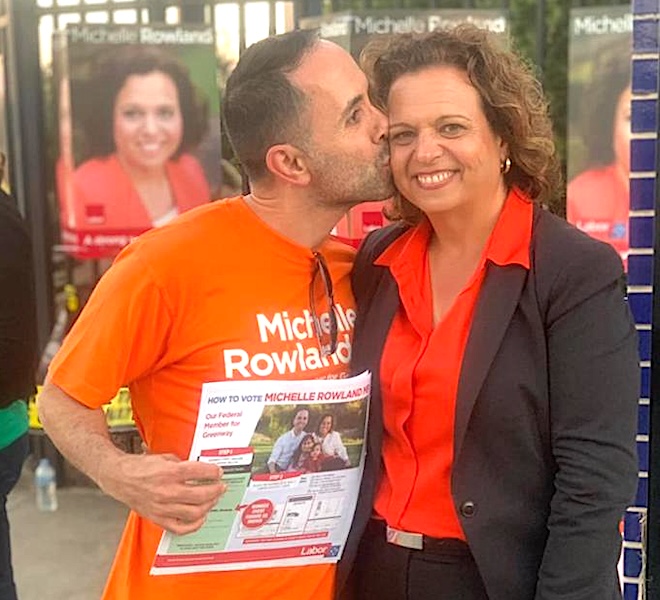
Michelle Rowland, the replacement AG, did ten years as a telecommunications lawyer at Gilbert + Tobin. Her husband, Michael Chaaya, is a partner at Corrs in the superannuation area.
Her mother is a Fijian and she was raised in Seven Hills, west of Sydney, with a Catholic education.
In 2012 she voted against a bill for marriage equality, but four years later she was onboard with the idea. After the YES vote she told the Guardian:
“Personally, a conversation I had with a mother in Seven Hills provided me with an important perspective. Her son is on active service in the Australian navy and he wants to marry his partner. This man is putting his life on the line in service to Australia.
Who am I, and who is any person, to say that this man should not be entitled to marry the person he loves?”
She is also reported in July 2021 to have been an enthusiastic advocate of Labor dropping its policy to get rid of negative gearing.
She was concerned that migrants in her electorate should be encouraged to amass wealth through home ownership and that the party’s then policy on negative gearing scared them off.
As Communications minister her signature flop was the abandonment of the recommended ban on online gambling ads on free to air TV and banners at sporting events, particularly the NRL and AFL.
Rob Nicholls, a consultant who reviewed the gambling advertising policy for the government, was a colleague of Rowland at Gilbert + Tobin.
Her media announcements since taking up her new job show a sprinkling of motherhood announcements, but little indication of any excitement. Lionel Murphy she is not – but it’s early days.