






Law shop for worthy causes, Slater & Gordon, has launched a class action in the Federal Court against the WA government on behalf of Aboriginal tenants of the State who are living in housing that is well south of sub-optimal: see 7.30 Report.
The photographs alone are harrowing. Where does the mindset come from that allows conditions to deteriorate to such an extent?
Why does the WA government treat its indigenous tenants with total disregard, a contempt that is not merely an emotional statement, but a clear defiance of the law on landlord and tenants, and on public health.
A clue lies in the 7.30 Report. Slater & Gordon’s Gemma Leigh-Dodds said:
“We say that as the landlord, the state has to uphold its end of the bargain, it can’t just collect rent and do nothing.
“We’ll be seeking compensation to make right where people have been paying too much rent for houses that are just simply not up to scratch.”
Bayulu community director Vivian Gordon says many homes within her community have plumbing and sewage problems, with tenants waiting months for critical repairs.
The comments from Vivian Gordon remind the sharp eyed reader that it’s nearly three decades since the WA Supreme Court, in the shape of Tony Templeman J, delivered Atyeo v Aboriginal Lands Trust [1996] WASC, 4 November 1996.
No action number known, as the Court presumably didn’t bother to pass the decision on to Austlii, a trick also pulled in Judamia v WA FCt SCt of WA; Library No 960114; 1 March 1996.
Atyeo is however available to us through its reprinting in the Australian Indigenous Law Reporter: (1997) 2 AILR 25.
This case illustrates the mind set of State bureaucrats (and judges) in the West and is a foundation for the lack of attachment to the State’s responsibilities as landlord.
From the AILR we glean that Bill Atyeo, the Health Officer for Halls Creek Shire, had sued the ALT, an arm of the Sand Groper government, on behalf of the overwhelmingly aboriginal inhabitants of the Shire, all of them tenants of the ALT.

Leigh Dodds from Slater & Gordon: houses not up to scratch
Atyeo sought no more than that the State as landlord adhere to the requirements of the Health Act 1911 which provided at s.99:
(1) No person shall erect, rebuild, maintain or use any house … without providing for the same sanitary conveniences, and also bathroom and laundry and cooking facilities … in accordance with the by-laws of the local authority.
…
(3) If it appears to the local authority to be advisable that any house … should be provided with an apparatus for the treatment of sewage, it may cause written notice to be served on the owner of the house … requiring him … to provide and install such apparatus … and such owner shall comply with such notice …
(4) A person who neglects or refuses to comply with the requirements for a notice served on him under subsection (3) commits an offence.
Atyeo’s affidavit on information and belief from one of the Aboriginal inhabitants of the Shire, Mr Allan McDonald, as set out by Templeman J, tells the story.
In his affidavit in support of the application the plaintiff says he was informed by Mr McDonald that he wished to install toilet facilities privately, “… as he was fed up with his family being forced to go to the toilet in the scrub, and attend school without a shower or clean clothes”.
Mr McDonald wanted his family to be able to encounter the modern world on that world’s terms and was confronted with such resistance from the State as landlord that he was forced to contemplate making his own arrangements for the services that the Health Act promised him.
Surely the State would not resist this plea not just for help, but for adherence to law? And if it did, surely the Supreme Court would see the law applied so that Blackfella tenants received the services promised by the statute?
Well, “no” to both those pious platitudes. The ALT trenchantly resisted the demand for its adherence to the Health Act, and Templeman J went out of his way to find that they could so resist, on the basis of the presumption that statutes do not bind the Crown.
That this was argued six years after the High Court decision in Bropho v WA(1990) 171 CLR 1 didn’t faze the Court.
The High Court in Bropho said that the presumption was not a “rule” and should be tempered according to inferences as to the intention of parliament as to whether governments were to be bound.
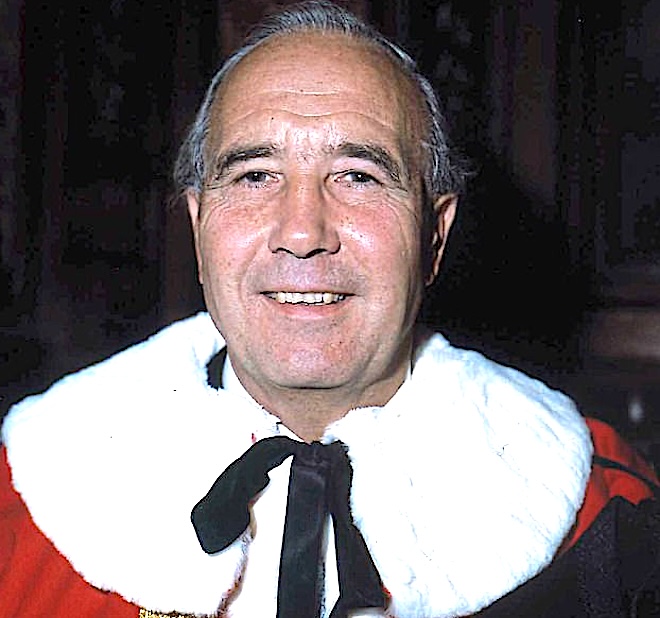
Lord Templeman (aka Sid Vicious)
But the judge (nephew of Lord Templeman of the now disbanded House of Lords) oiled his way around the High Court in quick time. Even allowing for a waxing and waning of the “rule” of Crown immunity from statutes (at its high point after the Bombay case in the Privy Council in 1946), the relevant amendments to the Health Act had been passed at a high point, and the decision in Bropho shoudn’t be read backwards in time.
So much for Blackfellas attempting to stand in the modern world on its terms. Needless to say, the health statistics for Halls Creek (and everywhere else that this sort of thinking prevails) go on being abysmal, while the country tuts over retrograde figures in our annual Closing the Gap scorecard.
But Templeman’s haplessness isn’t just about delivering yet another uneven playing field to the indigenous. It’s about the courts of this nation in thrall to a long dead imperial past.
The “rule” of Crown immunity, already apparently disassembled in Bropho, is of the weakest provenance imaginable, being based in the 1842 misreading of an elderly Tudor period judgment.
Baron Alderson in Donaldson relied not just on counsel, but losing counsel, for the proposition that statutes are made for the hoi polloi, not for the monarch.
This defiance of the reach of statutes (the leading cases from the Elizabethan and Jacobean periods, Willion v Berkley and the Magdalen College case made express provision for the person of the monarch to be bound) reached a Victorian apogee, judges warbling over the sanctity of the monarch from nasty statutes.
What this has to do with a twentieth first century Australia, with governments (Crowns) involved in myriad commercial and social enterprises, defies belief.
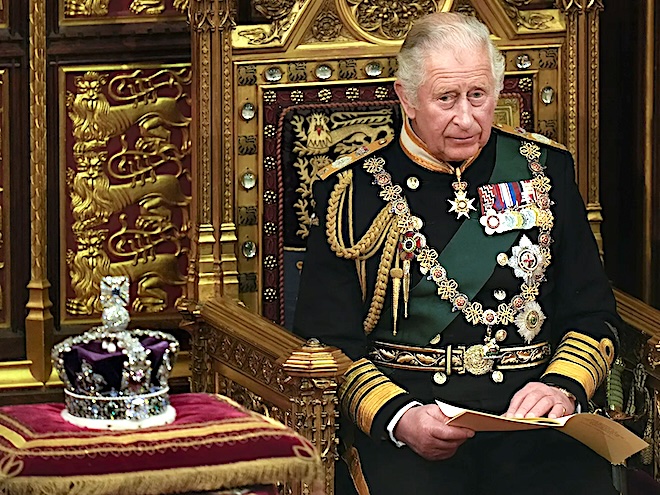
Immune
Not only are regulatory statutes rendered nugatory, but those adversely affected by the resulting lacunae in the law are always those at the bottom of the food chain: black, migrant, green protesters (themselves standing in for inanimate aspects of the natural world).
The WA Supremes have made an art form of avoiding the intent of Bropho; see not just Atyeo, but forestry cases from the 1990 such as the Bridgetown Greenbushes case (1997) 18 WAR 126 where reams of environmental legislation were avoided to allow the department that controlled the forests, CALM, to sell timber access to its mates such as Bunnings.
It’s not only the West that engages in government protectionism and Crown cronyism: it’s near fifty years since NSW and SA both had law reform bodies recommend action to curb the Crown immunity. Long buried in bottom drawers.
SA has gone one better by writing into its Interpretation Act, after Bropho, that where the Crown has immunity, those with whom it contracts will also obtain protection from the reach of statutes.
This gave effect to the rule in Bradken v BHP(1979) 145 CLR 107 that those in contract with the Crown be immunised lest the Crown be prejudiced.
That in turn worked an unwitting re-ignition of the dispensing power [kings authorising departure from terms of statutes] abolished by the Bill of Rights 1689.
The SA government can now shield its mates from regulatory regimes through commercial channels. What a wonderful world.
It doesn’t have to be this way. The New Zealand Parliamentary Counsel inserts a binding the Crown clause into all legislation in that country.
British Columbia and Prince Edward Island have reversed the presumption by statute. The Indian Supreme Court abandoned the presumption in 1967 as out of touch with modern requirements.
Yet the coterie of Crown Law offices in this country, Commonwealth, six States and the Northern Territory (the ACT remains aloof from this nonsense) will die in a ditch before they surrender this most precious of Crown jewels in the fight for litigious unfairness.
The “rule” of presumed Crown immunity is a judge created fantasy which appears unlikely ever to be subject of legislative overthrow in this country: only judges can sweep this folly away.
In the meantime we are left with the bureaucrat who bald-faced told the WA Inc Royal Commission in the early 1990s that as a public servant he knew all about the Crown immunity, and accordingly he’d advised the State Government Insurance Office in WA to buy 20 percent of the share holding in Bell Ltd with a view to on-selling to Alan Bond, who already held 20 percent.
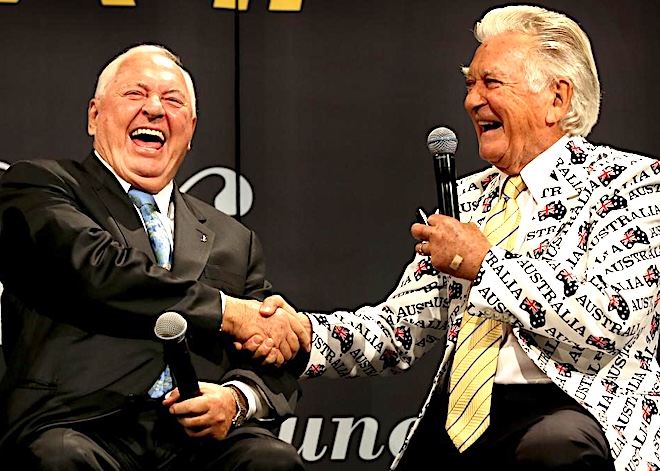
Bond: absolved of statutory restrictions
To purchase any more than that, Bond would need to go through public disclosures of intent. That process was avoided by the Insurance Office, a Crown body, unencumbered by the then Acquisition of Shares Code, selling to Bond who was in turn absolved of any statutory restrictions.
This sheltered workshop approach to selective law application favouring the rich in turn leads to the debacle which is public housing for the indigenous: cast adrift from the legal structures that are designed to protect powerless tenants.