





Geason: not sitting until further notice
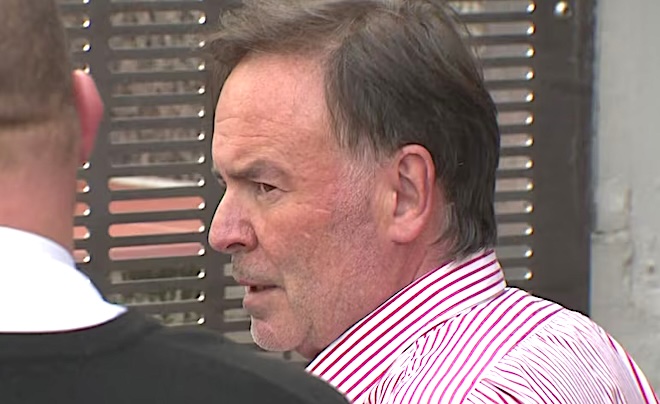
The Van Diemen’s Supremes have been in a bit of a pickle as a result of the enforced departure of Justice Greg Geason.
Greg is absent with leave while his domestic violence charges are unresolved.
In November last year, the police served Geason with a Family Violence Order, which related to a complaint from his partner.
Later he was charged with assault and emotional abuse arising from allegations by the same complainant. He’s out on bail with the family violence order still in force.
Early in 2024, HH was charged in NSW with breaching the FVO. He has pleaded not guilty to all charges.
In April 2023, a Full Court consisting of Geason, Justice Tamara Jago and Acting Justice Brian Ross Martin heard an appeal in a forestry dispute.
The following February the applicant filed an interlocutory injunction seeking to stop a state-owned forestry operator, Sustainable Timber Tasmania, chopping down trees in a designated coupe set aside for timber harvesting.
About two months earlier, in December 2023, Geason signed an undertaking with the House of Assembly and the Legislative Council that he would not sit as a judge or exercise any of the powers of a judge until the criminal matters were finalised – unless the chief justice “might request” his involvement in the work of the court.
On March 1, 2024, Chief Justice Alan Blow said, when delivering judgment in Ding v De Wit, “I consider it inappropriate to make any such request while the charges against him are pending”.
While the appeal decision in the forestry case was reserved, Geason ceased to have jurisdiction as a Tasmanian Supreme Court judge – and who knows how long it might take to finalise the assault and emotional abuse cases and the alleged breach in NSW of the Family Violence Order.
By February 2024 Martin and Jago indicated that they could deliver a judgment by themselves and asked the parties whether they wanted to wait until Geason’s position “became clearer”, or whether the whole thing should start again with a rehearing of the appeal, or let the two judges still sitting get on with it.
Geason was asked for his input, but he did not reply.
The appellant wanted the court as constituted to deliver judgment as soon as possible, while two of the three respondents said they would be happy if Martin and Jago delivered judgment, but indicated that the legal issues are “complex” (ss.14, 15 Supreme Court Civil Procedure Act (Tas).
The appellant contended that the two-judge appeal bench was irregular and should include Geason or be reconstituted with three new judges.
Nonetheless, Martin and Jago decided to press on.
“It is clear that the Chief Justice will not invite Geason J to exercise the jurisdiction of a Supreme Court judge until all charges have been finally determined. Bearing in mind that two jurisdictions are involved, final determination of the charges is unlikely to occur for many months. Plainly the interests of justice dictate that the judgment of the Court should be given as soon as possible.”
Martin continued:
“I am minded to the view that Jago J and I, sitting as the original Full Court, could have lawfully delivered judgment. However, this issue was not fully argued. With the encouragement and consent of the parties, the Court comprised of Jago J and me, ordered that the Court be reconstituted.
In my view, the orders made were lawful and appropriate in the interests of justice. There is no valid reason why the final resolution of the matter should be delayed in the manner suggested by the appellant.
There is no unfairness attached to Jago J and me now delivering judgment. The demands of justice strongly favour such a course.”
≈ ≈ ≈
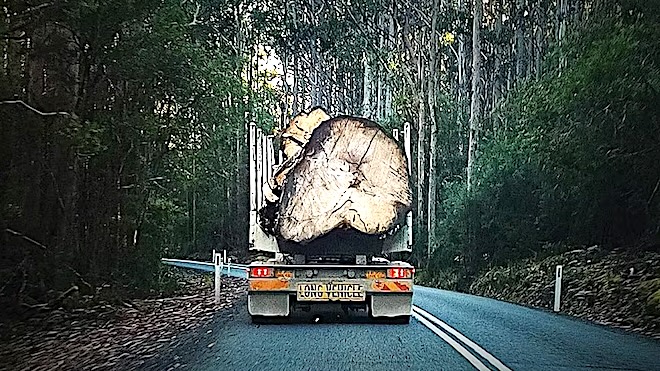
Logging in Tasmania: no bias
Some of the idiosyncratic details of Tasmania’s forestry management emerged in the court’s judgment.
The Forest Practices Authority administers the Forest Practices Act (Tas). Chopping down timber can only be done with authorisation by a forest practices plan certified by a delegate of the Authority.
Another outfit, Sustainable Timber Tasmania (STT), is the corporate manifestation of Forestry Tasmania and it is responsible for the chopping down.
In the case determined by Martin and Jago, it appears that the delegates of the Authority who certified the plans were also employees of STT. In at least one instance mentioned by the court, a delegate also played an active part in the preparation of the forest practices plan.
A forest practices manager who is employed by the tree loppers looks at harvesting from “both angles”. To give comfort to this arrangement, the statutory scheme excludes the rule against bias.
STT argued that the certifiers have no financial interest in the logging plans and the exercise of their powers is “not in any way incompatible with their role was an employee of STT”.
The applicant, known as Blue Derby Wild, is a non-profit community organisation run by volunteers with the aim of protecting Tasmanian native forests. It contended that the bias rule has not been excluded by the legislation, so the Authority should be pursing the object of the legislation and “not otherwise in any sense interested in the outcome”.
In any event, the appeal court found that Blue Derby Wild didn’t have standing to bring the claim and even if it did the exercise of the power to certify the plans “was not conditioned on the absence of apprehended bias”.
Natural justice is not a priority under this quaint Tasmanian self-funding, self-regulating, forests management scheme.