






Salvatore Vasta – tantrum
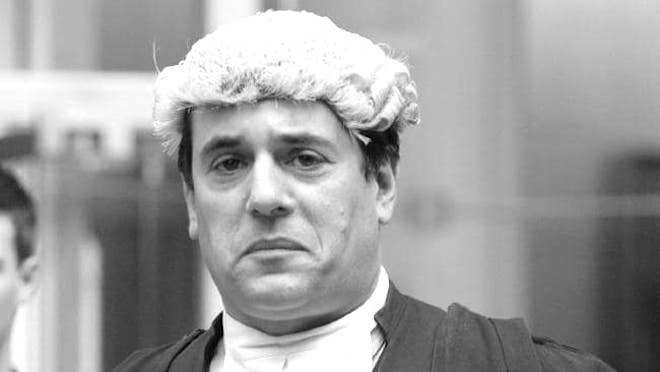
In December 2018 Judge Sal Vasta, sitting in Brisbane in the then Federal Circuit Court, lost it with a party before him, Mr (name changed for litigation) Stradford, and sentenced him to 12 months in chokey for contempt of court.
Sal asserted (incorrectly) that Stradford had defied orders to produce financial documents relevant to his matrimonial proceedings, and that another Circus judge had determined that he was in contempt of Sal’s orders to produce.
Mr and Mrs Stradford were both present, neither represented by lawyers, as Sal, confronted by Stadford explaining that he was physically unable to produce any more documents, worked himself into a rage.
Later judicial commentary referred to Sal’s performance as “a ‘parody’ of a court hearing”. Natural justice, as usual was left outside.
Stradford did a week inside, in the course of which he was threatened and witnessed serious violence. The cavalry then arrived and got him out.
He sued Vasta for false imprisonment, along with the MSS court room guards who took him away on Sal’s orders, the Queensland Police who took custody of him, and the Correctional Officers who held him.
Michael Wigney of the Federales heard the case (Stradford (a pseudonym) v Judge Vasta[2023] FCA 1020) and determined in Stradford’s favour, awarding him a bag of over $300,000 in damages.
Wiggers found against a judicial immunity from suit that would cover the damage flowing from Sal’s tantrum. That decision was then removed straight into the High, which determined 7 to zip that Sal did have judicial immunity – “Despite the many and egregious errors” in his treatment of Stradford.
Vasta’s immunity followed from his “acting in the purported exercise of the judicial function of a judge of the Federal Circuit Court” (Vasta and ors v Mr Stradford (a Pseudonym) [2025] HCA 3, per Gageler CJ, Gleeson, Jagot and Beech-Jones JJ at [114]).
An immediate response might imagine this as an elite class protecting its own.
But the ponderous analysis (160 paras from the plurality alone) of the now non-distinction between inferior and superior courts (judges in lower courts now have unequivocal equality of immunity with those in higher courts for actions taken in the exercise or purported exercise of their judicial function or capacity); and whether the order to imprison Mr Stradford was valid even though affected by jurisdictional error (it wasn’t valid, but judicial immunity saw Sal safely to shore), is a model of judicial reasoning compared with the US Supreme Court’s 6-3 immunising of the President last year: US v Trump 603 US 593 (2024).
The take home message from the Australian court was that combing through judicial actions seeking to determine a malign intent or other serious defect, defence to which attack would involve a judge in giving evidence as to his/her state of mind, was destructive of the independence of the judiciary.
A judge spoke on a matter once: when the judgment was delivered. To open the possibility of raking over the judgment later left judges looking over their shoulders.
The standard protection for executive officials in this country, originally expressed as covering their actions if bona fide in performance of statutory functions (now simply “in good faith”), has no application to judges, because of “… the potential for the rationale for the immunity to be eroded by an inquiry into the judge’s state of mind when quelling a legal controversy” (plurality at [88]).